Culture is considered essential, but its practice is on the decline.


At the heart of the French paradox lies a lack of motivation.
A national survey conducted by IFOP for the Art Explora Foundation, in partnership with France Culture, among more than 4,000 French people, highlights a striking paradox: while 86% of French people consider culture essential to their quality of life, 20% have not engaged in any cultural activities over the past twelve months. Beyond the obstacles traditionally cited, a lack of interest appears to be the main barrier.
A special evening exploring “how culture shapes our lives”
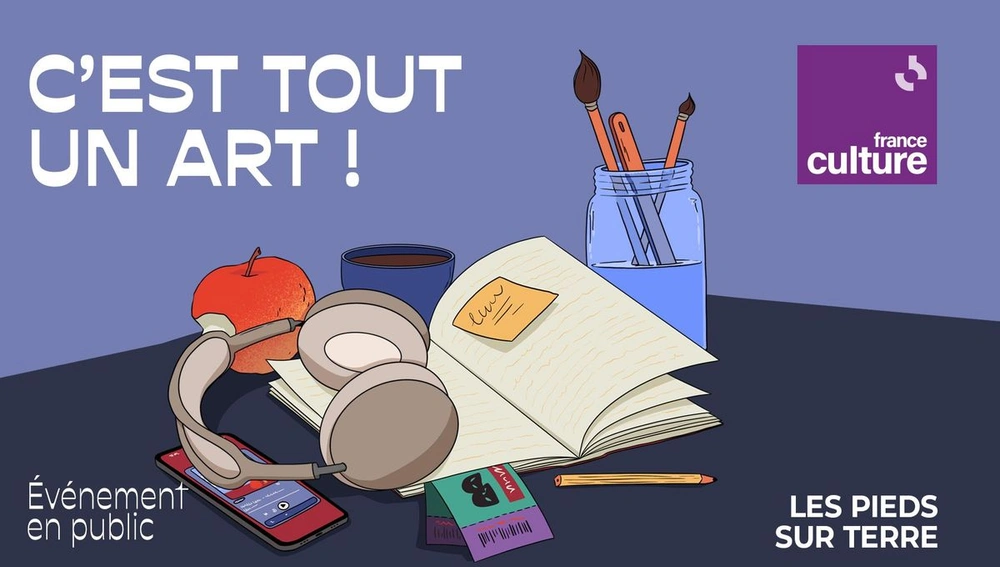
On April 8 at Studio 104 of the Maison de la Radio et de la Musique, France Culture and the Art Explora Foundation a special evening to celebrate “what culture does for our lives,” featuring a first-of-its-kind public event: a stage adaptation of the iconic radio show *Les Pieds sur terre*, which attracts over 3 million listeners each month.
Eightpeople shared their unique, funny, and touching stories about the role that music, film, reading, and the visual arts have played in their lives. Stealing a painting they fell head over heels in love with,escaping the confines of detention through poetry, honoring the memory of a father who was a fan of Johnny…
These testimonials build on the findings of the study conducted by Art Explora on the French people’s relationship with culture. The special series “Les Pieds sur terre – C’est tout un art!” is available on franceculture.fr and the Radio France app. Check it out here now or watch the full episode on YouTube.
Culture: essential, yet increasingly neglected
Today, an overwhelming majority (86%) of French people consider culture to be essential to their quality of life, on a par with time spent with family (93%) or friends (89%), and ahead of sports (74%).
But a paradox emerges: while culture is widely valued, cultural participation is declining sharply. Between 2017 and 2025, museum and exhibition attendance fell from 62% to 43%, and movie theater attendance from 77% to 57%. At the same time, 20% of French people have not made any cultural outings in the past twelve months. The paradox is all the more striking given that 75% of these non-participants surveyed by IFOP nevertheless consider culture to be essential to quality of life.
This decline in cultural participation is taking place against a backdrop still marked by social and regional disparities. Thus, 43% of French people visited a museum or exhibition during the year, with marked differences across demographic groups: 59% among higher-income groups versus 38% among lower-income groups, and 52% in the Paris metropolitan area versus 37% in towns with fewer than 20,000 residents.
These disparities are also evident in people’s relationship with culture: 18% of French people say they do not feel connected to any form of art. This proportion rises to 38% among those who have not attended any cultural events in the past twelve months. They are also reflected in how culture is passed on: these groups are less likely to encourage their children to participate in cultural activities (49% versus 76%).
Differences in cultural practices are a significant issue: beyond their impact on physical and mental well-being— the primary driver of cultural engagement—the study shows that people who engage in cultural activities have a more positive view of values such as respect, dialogue, sharing, and solidarity, and are more likely to get involved in community life (60% versus 40%).
A lack of interest in culture
More than a lack of time or money, the study highlights a more unexpected and as yet little-explored obstacle: a kind of “lack of interest in culture.”
Surveys conducted by IFOP among "paradoxical audiences" (people who value culture and have easy access to it, but rarely engage with it) reveal that this lack of enthusiasm does not reflect rejection or disinterest, but rather a difficulty in turning interest into concrete action.
1. The pressures of everyday life
Fatigue after work, a packed schedule, mental overload, or ingrained habits make it harder to plan a cultural outing. In daily lives that already feel very full, it becomes difficult to “make room” for cultural activities, which are often seen as time-consuming or a hassle to organize.
Beyond a lack of time, the interviews reveal a kind of inertia stemming from routine: cultural activities struggle to fit into the usual schedule and often remain mere intentions.
“I often find myself thinking, ‘I won’t have time this week.’”
“When you leave a play, you always feel really happy, and I often ask myself, ‘Why did I wait so long to go back?’”
“It’s really time-consuming… even though I love it, you have to be prepared.”
2. The effort to anticipate
In addition to these everyday obstacles, there are more cognitive and experiential barriers, which are linked to the idea of being “prepared.” Planning a cultural outing involves making choices, making reservations, and thinking ahead… All of these steps can make it harder to actually take action.
Uncertainty about what’s available and the fear of being disappointed contribute to putting off the decision. Culture thus comes across as a demanding activity that requires planning and commitment, whereas other forms of leisure offer more immediate gratification.
“You can’t just drop by on a whim… you always have to make a reservation.”
“I ask myself: Will I still feel like it on the day?”
“It’s no longer a casual outing; it’s a planned outing with a schedule to follow.”
3. The perceived experience
The actual conditions of visiting can also be a deterrent: crowds, discomfort, difficulty getting around, or the feeling of not quite belonging in certain cultural venues.
“We have everything we need to stay home; it’s comfortable… it doesn’t make you want to go out.”
In our busy daily lives, culture faces direct competition from simpler, more readily accessible forms of entertainment. Digital technology is exacerbating this trend: 65% of French people watched a movie online during the year.
Inspiring interest and developing new ways to engage with art: Art Explora’s mission
Given this reality, the challenge is no longer simply to make culture accessible, but to rekindle the desire for it. Today, sparking that desire means overcoming more subtle obstacles: fatigue, lack of time, a lack of spontaneity, or even the feeling that it doesn’t apply to them.
This requires a fundamental rethinking of how people access culture: by bringing it closer to where people live, by offering more flexible formats tailored to today’s pace of life, and by creating engaging, immediate, and communal experiences capable of reigniting enthusiasm.
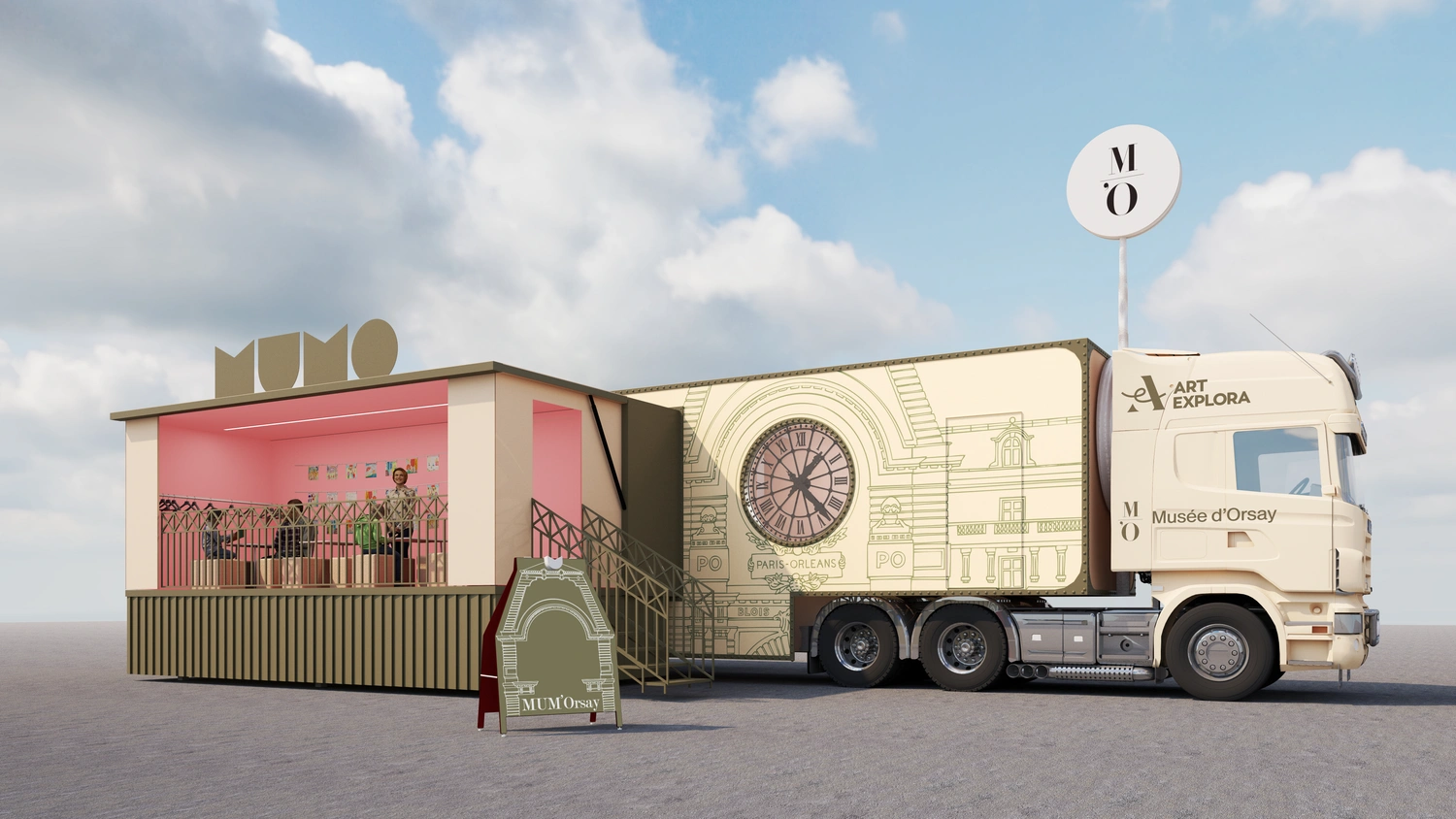
It is precisely within this framework that the Art Explora Foundation mission is situated. Through its traveling initiatives— from the Art Explora Festival to the MuMo museum trucks—the Foundation reaches out to audiences and brings culture outside its traditional settings.
By reaching out to areas that are sometimes underserved by cultural offerings and by setting up shop in the heart of cities, neighborhoods, or rural areas, these initiatives transform public spaces into places where people can engage with the arts.
MuMo, a true “museum on wheels,” offers exhibitions developed in collaboration with major institutions, which are free to the public and brought directly to local residents. The Art Explora Festival, meanwhile, features a multidisciplinary program open to all, combining exhibitions, performances, screenings, and workshops, and bringing the arts directly to audiences in the heart of the port cities it visits.
By reaching out to the public without any prerequisites or barriers, the Foundation is committed to making culture accessible through experience—one that requires neither prior knowledge nor familiarity. In this way, it helps toovercome not only geographical barriers but also the more subtle obstacle of “lack of interest,” by creating opportunities for immediate, enjoyable, and shared discovery.
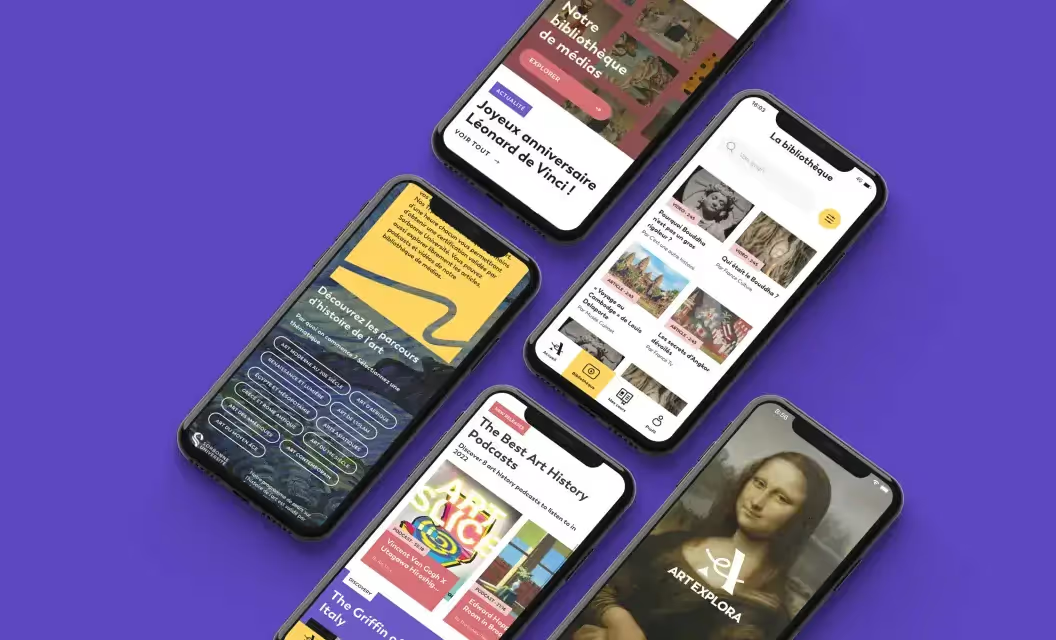
The Foundation also leverages digital technology as a tool for engagement. Through Art Explora Academy, a free platform offering art history courses, and the development of immersive experiences, it provides accessible, flexible formats tailored to contemporary needs.
By making free access a central feature of all its programs, Art Explora takes concrete action to combat social and cultural inequalities.


.avif)