.webp)


Archacobotany & The Apocalypse
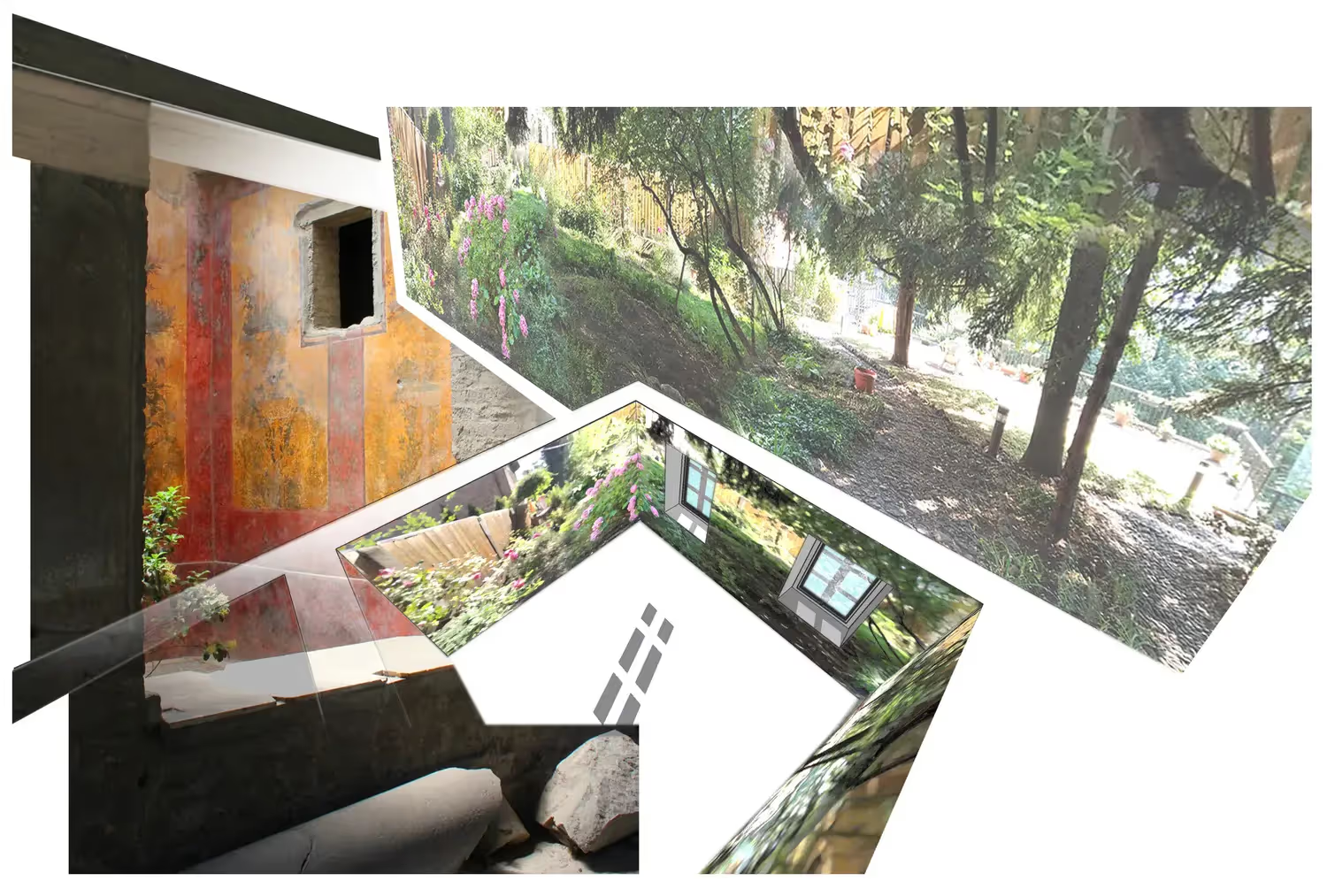
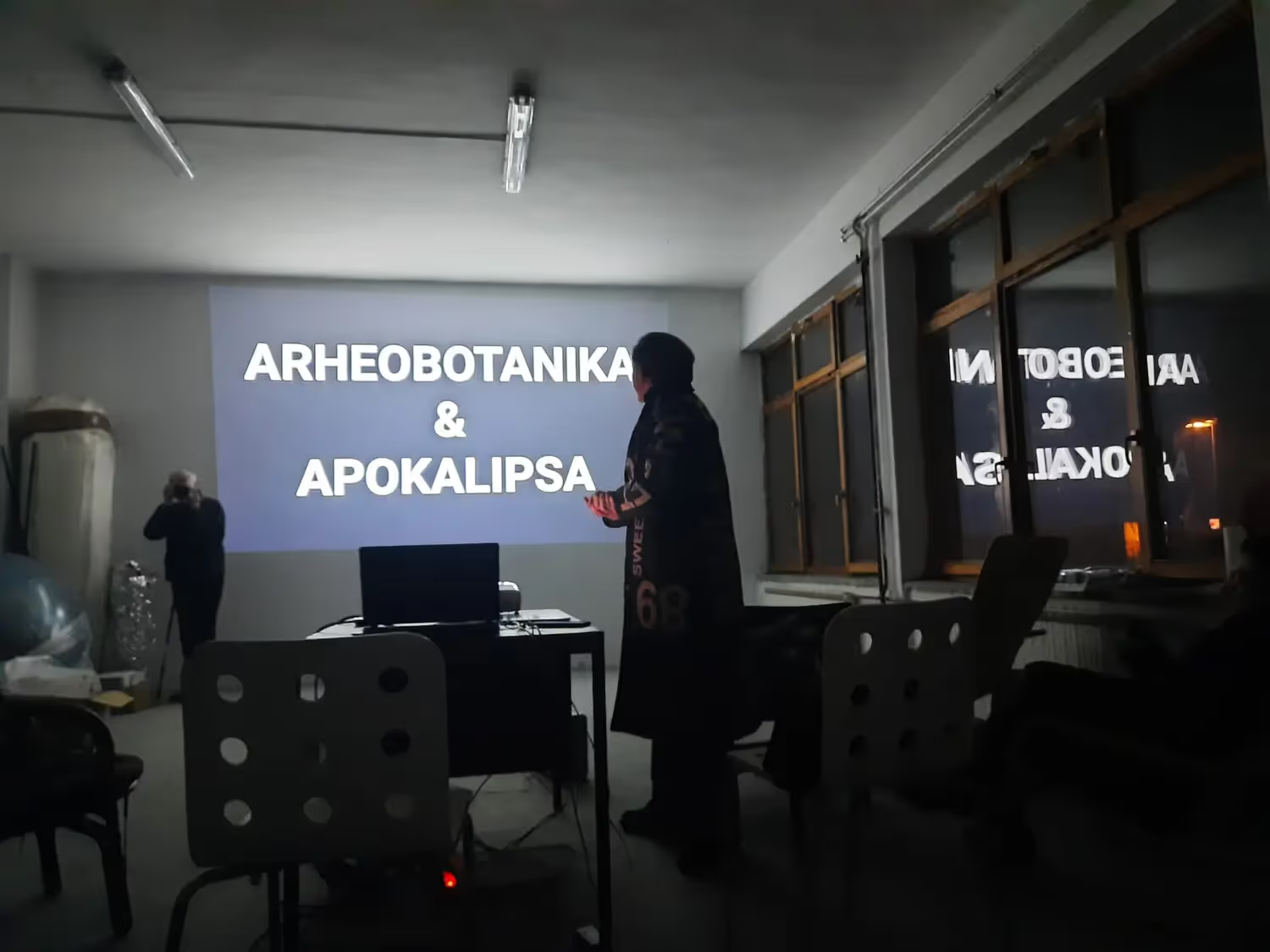
In her lecture-performance ARCHAEOBOTANY & THE APOCALYPSE, via narrative and media content, Raščić presents ongoing artistic research begun in 2023 for her new project and lifelong endeavor. With the aim of covering the entirety of her Sarajevo studio with paintings in the 'buon fresco' technique, the project was inspired by the artist's encounter with two historical figures. One is the Roman empress Sabina Poppaea and the other is Wilhemina Jashemski, an archaeobotanist who revolutionized this discipline in the 1970s with work on the excavation site of Sabina Poppaea’s villa in Oplontis near Pompeii.

Dates and times
Wednesday September 17, 19:00 to 20:00

Address
Karolina Riječka Pier
Raščić uses the reconstruction of the gardens and wall paintings of the Villa Poppaea, buried by volcanic ash during the eruption of Vesuvius, as a polygon for reflection on the relationship between man and nature and its representations. In the context of escalating manifestations of climate change and atmospheric-geological events, the artist reaches toward archaeobotanical methods, contemporary image and media theory in order to arrive at formal, visual and theoretical conclusions that include traditional artistic as well as contemporary media techniques. In terms of content, the project is conceptualized through the elaboration of several constructs: from the personal experience of both Poppaea's and the artist’s own garden, via an investigation of the repertoire of Roman garden fresco painting, to speculative considerations of the eruption of Vesuvius as an example of the apocalyptic might of nature.
©Photo Kata Mijatovic
Lala Raščić
Lala Raščić is a multimedia artist exploring tangible and immaterial cultural formulae to build narratives that are manifested through video, live performances, installation environments, objects and drawings. Her interests are simultaneously trained on contemporary and historical storytelling practices, complex systems of mediated knowledge production, as well as folkloric forms and mythology. Her work inhabits the space between concept and theatricality, often confronting the idea of high culture with popular, mass-media, and traditional cultural expressions, via a critical, namely, feminist position. Her practice at-large encompasses esthetics, feminism, historization and artistic production, as an ongoing, interdisciplinary, and modular endeavor anchored in the narrative and based on the subversion of civilizational tropes and the exploration of their transformative potential set against the backdrop of contemporary ontologies. Through a persistent challenge of the dominant patriarchal authority of ‘telling’, ‘knowing’, or ‘doing’ her position of narrator/maker is inseparable from the female-gendered embodiment of the same. In her work, be it verbally delivering a scripted monologue or dedicating herself to craftsmanship, the act of performing is the emancipatory fact.
Lala Raščić, born 1977 in Sarajevo, is currently living and working in Sarajevo and Zagreb. Raščić’s work has been presented in both international and regional solo and group shows, amongst others, at Kunsthaus, Graz; Manifesta 14, Prishtine; Röda Sten Konsthall, Gothenburg; Galerija Nova, Zagreb; MAXXI, Rome; Kunstverein Hamburg; MANN, Napoli; KADIST, Paris; ACA, Lafayette; Museum of Contemporary Art, Zagreb; National Museum of BiH, National Art Gallery and the Historical Museum of BiH, Sarajevo; GfZK, Leipzig; Sigmund Freud Museum, Vienna; 54th October Salon in Belgrade and The Renaissance Society, Chicago. Raščić had attended artist-in-residence programs at the Rijksakademie, Amsterdam; Museums Quartier, Q21, Vienna; Platform Garanti, Istanbul; and Cite des Arts, Paris, amongst others. Raščić is the recipient of several awards including the Future of Europe Award, YVVVA, Zvono Award. Raščić holds a MA/BFA degree from the Academy of Fine Arts, Zagreb. She is a member of artists’ associations in Croatia and the Sarajevo feminist organization CRVENA. As of 2017, with CRVENA, Raščić administers and organizes the Nona Residency in her studio in Sarajevo.
©Photo Ajla Salkić
