.webp)


Cross-Discussion - Aquacaux x Symbi0se / Hangar Zéro
How does an aquaponic farm really work? What are its benefits and limits? Paul Leroy (Aquacaux) and Arnaud Pigeon (Symbi0se) share their field insights: fish and plant production, economic viability, technical constraints, and the role of aquaponics in the food transition. It's also a chance to follow the evolution of the Symbiose project, from Hangar Zéro to a future farm in Normandy—a place of production, education, and innovation all at once.

Dates and times
Wednesday, October 7, 4:30 p.m. to 5:00 p.m.

Address
Marseille Wharf, Eure Basin
Aquaponics: a different approach to production, from prototype to the farm of the future
Aquaponics is often presented as an innovative technology. But how does an aquaponic farm actually work? What are its advantages, limitations and prospects for development?
Drawing on their respective experiences, Paul Leroy (Aquacaux) and Arnaud Pigeon (Symbi0se) will share their insights from the field: how an aquaponics system operates, fish and plant production, economic viability, technical constraints and the role of this approach in the food transition
The discussion will also cover developments in the Symbiose project, from an urban farm set up at Hangar Zéro to the development of a future farm in Normandy, designed as a centre for production, education and agricultural innovation.
Arnaud Pigeon
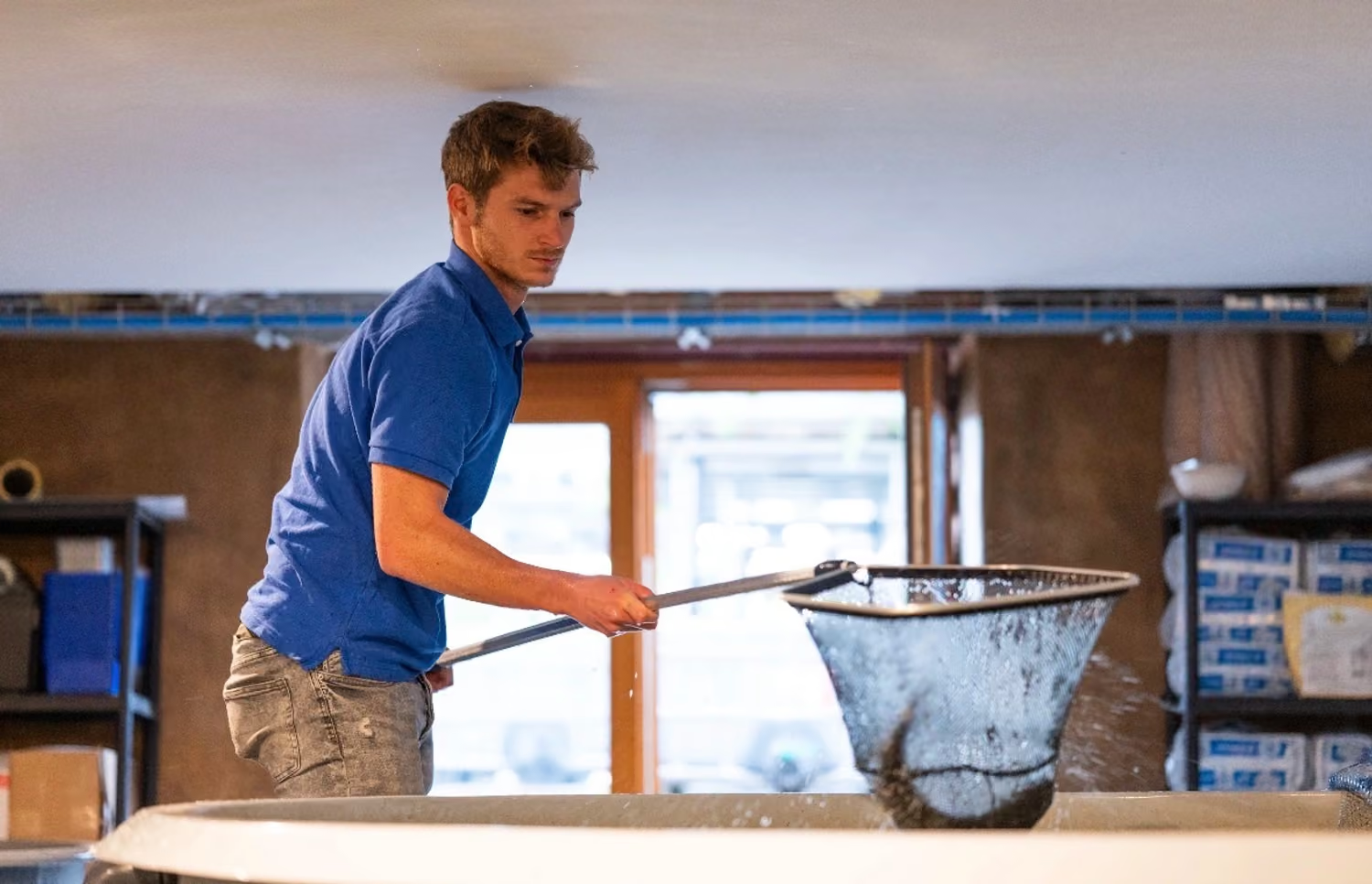
Arnaud Pigeon is the founder of Symbi0se, an aquaponics farm based at Hangar Zéro in Le Havre. After gaining initial experience in logistics, he chose to devote himself to a form of agriculture that is more local, more resource-efficient and more resilient.
For the past four years, he has been developing an urban farm producing microgreens, trout and processed products, whilst hosting educational visits and raising public awareness of the challenges of sustainable food systems.
He is currently working on a new project: Symbi0se Normandie, a larger-scale aquaponic farm combining agricultural production, aquaculture, education, the circular economy and the promotion of local produce.
Aquacaux
Founded in 1998, the Aquacaux association is a work integration social enterprise (Atelier Chantier d'Insertion) located on the clifftops above Le Havre. Based in a former NATO base by the sea, its activities have always been focused on the coastal and marine environment. Beach maintenance through the manual collection of macro-waste and the management of natural areas are two of the activities developed within the organisation. Brush clearing, pruning and eco-grazing operations all serve as training opportunities for its employees, and are carried out both on the association's own site and in partnership with the Seine-Maritime department on designated Sensitive Natural Areas, as well as through services provided to local authorities. Combined with naturalist expertise, primarily in botany, this enables the association to evaluate the actions it has implemented, adjust them, and make the most of the data and experience acquired. Finally, this natural area management work is complemented by a varied environmental education programme covering a range of themes related to understanding and preserving the coastline and marine environment.

The artists