
.webp)



Films on Loop Programme
'Acéra or the witches' ball' by Jean Painlevé, 1972 'LODOS' by Didem Özbek, 2014 'HOLE' by Didem Özbek, 2015 'Climbing the sea (Arrampicare il mare)', by Alex Cecchetti, 2023

Address
Riva Sette Martiri, Venice, Italy
Acera or the Witches' Ball by Jean Painlevé , 1972
France
15 min
Courtesy of Les Documents Cinématographiques - Archives Jean Painlevé
In Acéra ou le bal des vampires, Jean Painlevé takes an enchanting look at aceras, molluscs that he films as if they were dancers. The appearance of these molluscs contrasts with the jazz music composed by Pierre Jansen, while responding to it with movements that appear to be danced. In this video, Jean Painlevé celebrates the beauty of the strange, unknown and mysterious lives of the sea. The delicacy of the light, the composition of each image and the beauty of the seabed depicted encourage us to pay more attention to the richness of living treasures buried in the sea and the marvellous visions they produce.
Didem Ozbek
LODOS by Didem Özbek , 2014
Turkey
5 min
Courtoisie de l’artiste
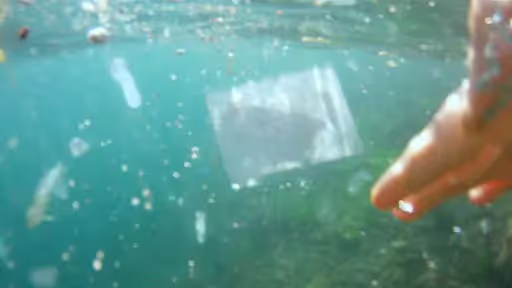
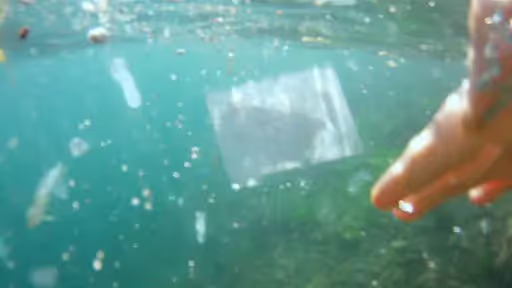
LODOS was taken on a sunny day in late October when the southwestern wind of the Bosphorus was blowing. Didem Özbek, the only swimmer of the day, jumps into the cold water and faces her fear after being surrounded by jellyfish, condoms and sanitary pads. Her favorite swimming route turns into an excruciating experience. Her fear is provoked within these pale objects, sabotaging her breathing and swimming skills. Unless she accepts to exist within this environment, it is impossible for her to survive among these creatures. Finally she comes ashore, and the video ends with a man looking at her in surprise. Özbek sees him as a representative of the authority that imposes power on the public day by day. Being invisible can help you survive in poluted seas where you're afraid to glide. On the contrary, being visible might block your freedom as this act generates public restrictions.
HOLE by Didem Özbek , 2015
Turkey
3 videos
8 min 20 sec each, 25 min total
Courtoisie de l’artiste
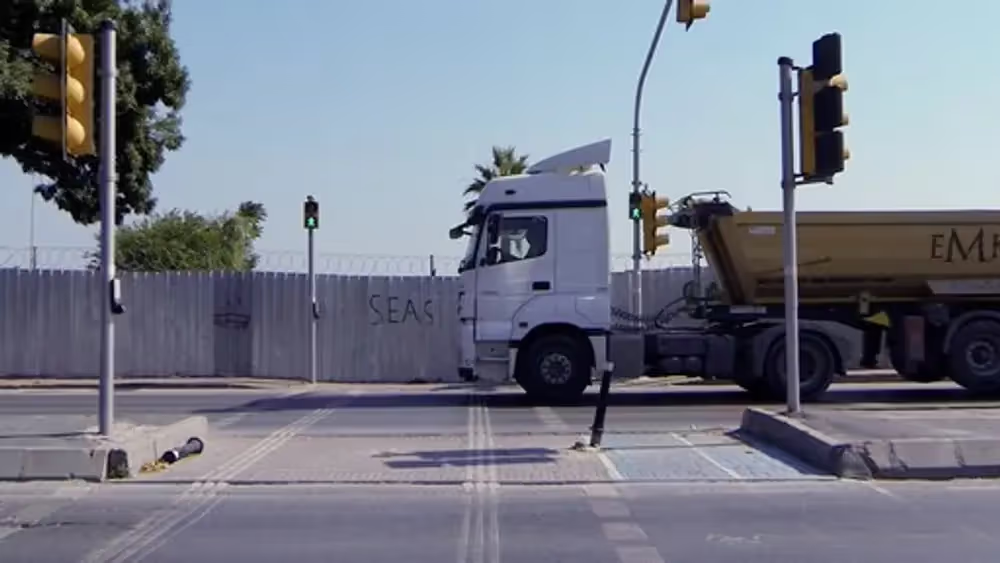
HOLE takes place in Kumkapı district, where the characters of Sait Faik's story [A Watermelon Exhibition] go swimming in 1936's Istanbul. An endless wall of construction panels blocks the access to the Sea of Marmara in the summer of 2015. The structure of the Eurasia Tunnel built to join Europe to Asia under the water prevents it from reaching the seaside. Didem Özbek, who goes through a time warp, finds a rabbit hole on this wall and drags the audience towards a group of swimmers. Time there seems stuck in 1936, where the immigrant characters of the present continue to swim. Meanwhile, Kumkapı, a fishing village of the past, has turned into a tourist scene with countless restaurants hiding Istanbul's Immigration Detention Centre on its back. The details that Özbek captures each time she reads [A Watermelon Exhibition] seems reflected in the three versions of the Hole.
Didem Özbek
Climbing the sea (Arrampicare il mare) by Alex Cecchetti , 2023
Italy
5 min 21 sec
Courtoisie de l’artiste
How much life in one single breath? This is the question the artist addresses, immersing us in this profound visual experience. A hypnotic video, in which the artist himself descends and ascends into the sea, climbing the depth with one single breath. Speaking, sleeping, singing – all are forms of breathing. Without breath, there is no life, no experience of life, no communication, and no celebration of what we live. Through breathing we can also travel to other worlds. Apnea is a way to visit a world otherwise inaccessible, the underwater. Through the simple act of holding our breath, we enter a new world; by holding it for too long, we exit another. Freediving is the art of fully living and experiencing one breath. Once you understand what a precious thing one single breath is, your days will never be the same anymore…
