
.webp)



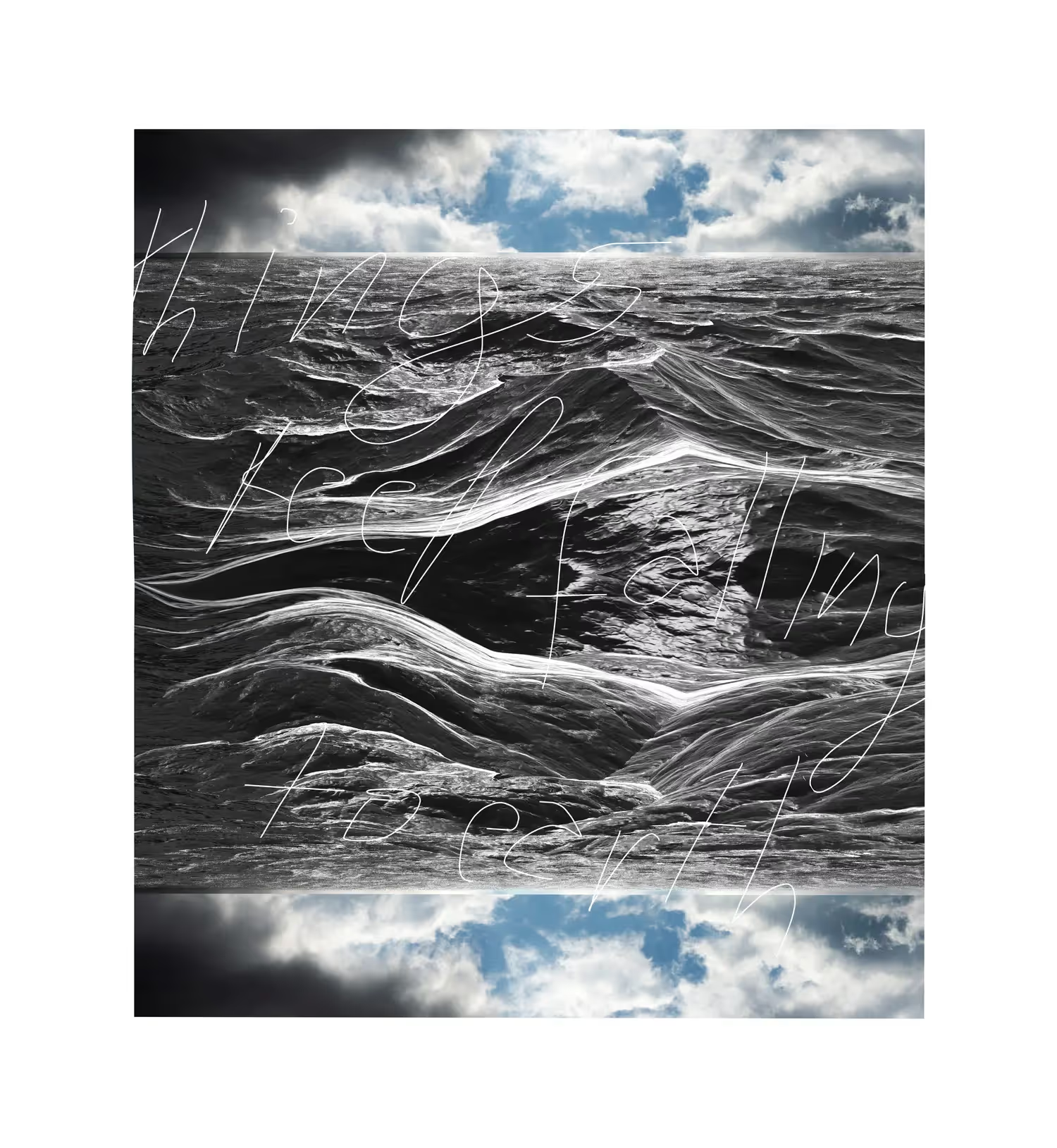
Flaka Haliti - Things Keep Falling to Earth
Based on subjective experiences, Flaka Haliti keeps on looking at our fragmented, contradictory present. At the centre of her artistic practice is the individual and the question, how identity is constructed in a global fluid militant world. The three billboards displayed at the Art Explora Festival in Durrës follow an "ethics of proximity" and reference the contradictions of our ambivalent contemporary reality, addressing socio-political issues such as migration and racism.

Dates and times
Every day

Address
Port of Durrës
The work "Things Keep Falling to Earth" comments on species that likely "immigrated" across the sea with the aid of cargo ships from the Black Sea region. Thus suggests, a phenomena which occur in accordance with the laws of nature and can no longer be reversed. Considering the paradoxes created by the attempts to solve our environmental problems, the work recontextualizes the ecosystem and associates its natural laws with our human cohabitation. This approach is underpinned by the notion that a sense of a particular place can feed equal support to both, conservative and progressive politics within larger contexts such as the nation or transnational realms.
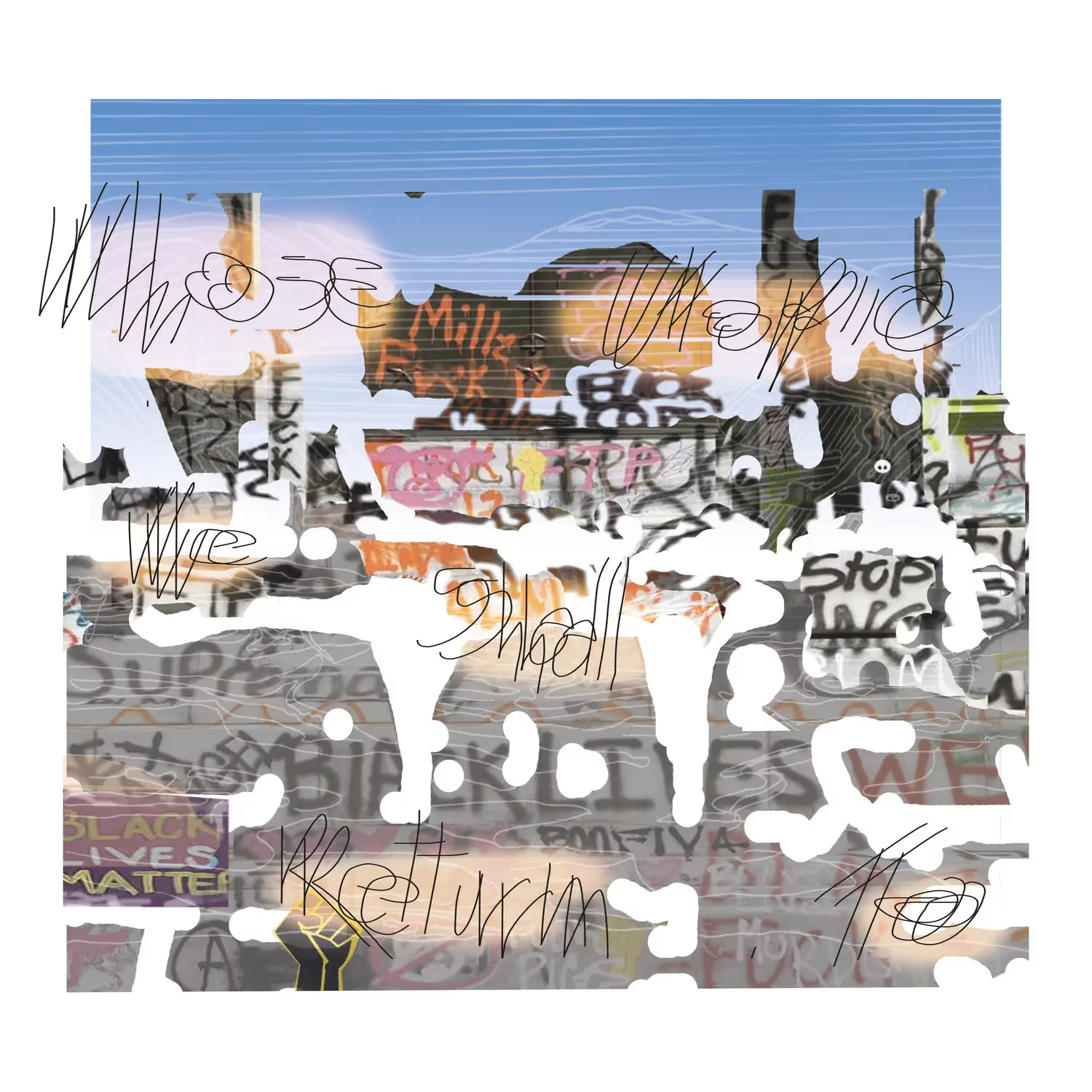
Within its graffiti street mundane aesthetics, the question is floating, “Whose Utopia we shall return to” – whose and which version of utopia do we want to invoke in a 21st century? This phrase appears on a collage featuring various socio-political and activist movements, showcasing symbols and demands for social justice. For one thing, this includes the question of which ideas, perspectives and visions have sway in our society. Who and what is heard, seen and represented – or not? At the same time, the collage suggests that we approach the concept of utopia from various angles, that we enter it as a space of possibility for diverse and multiple truths outside the purview of the dominant Western idea of politics and society. The question “WHOSE versions of Utopia are we referring to?” proposes the projection of an event of multiple truths, that is not yet imagined as a whole.
Credit: Pauline Ferron
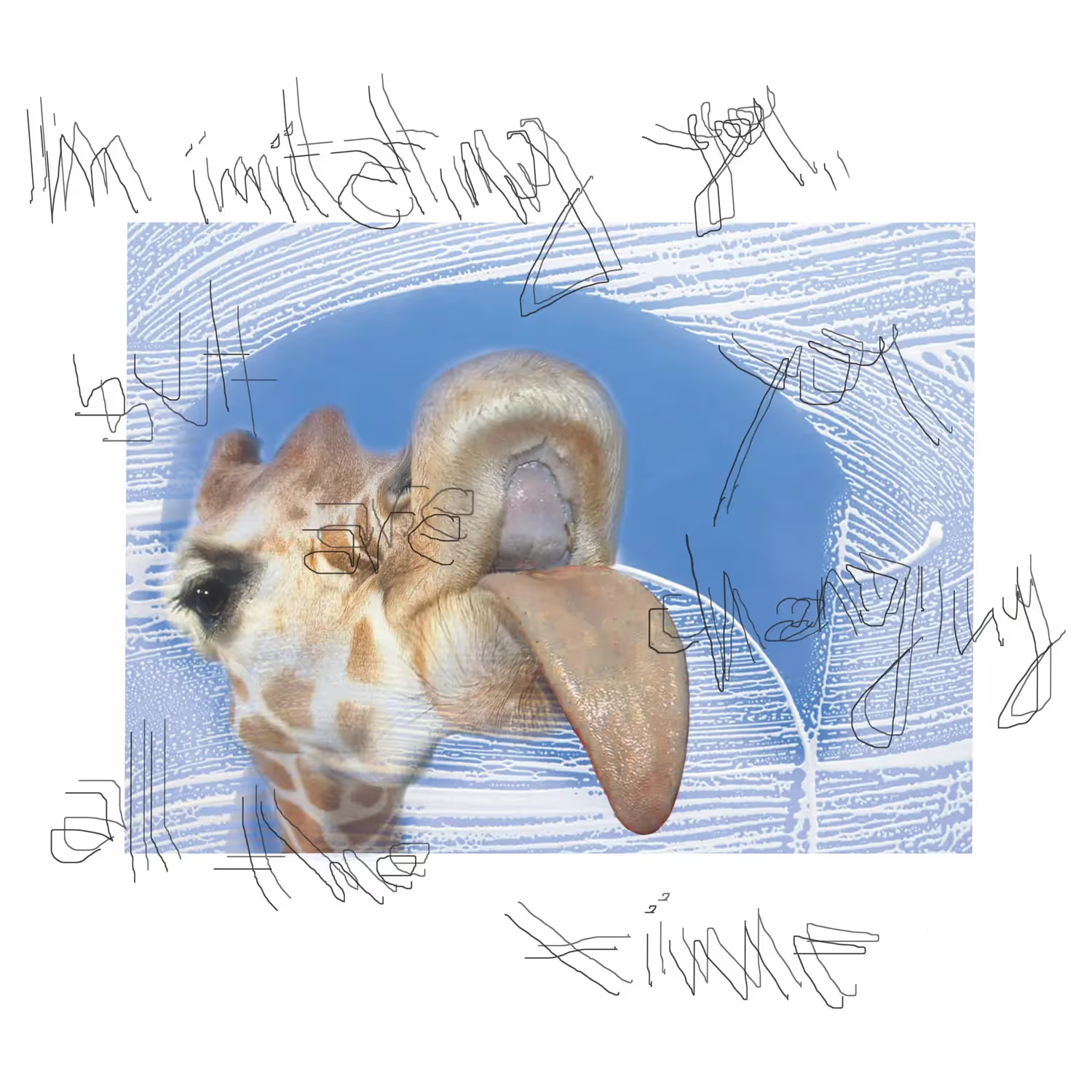
Addressing the social and economic structures imposed by dominant Western industrial nations, the billboard proclaims: “I’m imitating you, but you are changing all the time.” This alludes to developments in Central and Eastern European states after 1989, which, according to the artist, strive for an ideal utopian that remains perpetually out of reach. Democracy and capitalism are often perceived as the foundational criteria and guarantors of a Western standard of living, or at least they have been assumed to be so—until now, or perhaps no longer. Flaka Haliti employs irony through the image of a giraffe, symbolizing the pursuit of the elusive democratic ideal. She critiques a path to modernization that has been paved with imitation, suggesting that the integration these states aspire to often devolves into request for mere assimilation. The task of emancipation associated with becoming Westernized—a notion branded for post-communist countries after 1989—came with the confusion that while the East was expected to imitate the outcomes, it was not afforded the same means. This dynamic leads to feelings of failure when faced with the apparent superiority of their Western European neighbors and the seemingly constant evolution of values that those neighbors no longer even adhere to: “I’m imitating you, but you keep changing all the time.
Flaka Haliti
Flaka Haliti (born 1982 in Prishtina, Kosovo, lives in Munich and Prishtina) She completed her studies at the College of Fine Arts, Städelschule in Frankfurt am Main and presented her artistic work in individual and groupd exhibitions at the mumok - Museum Moderne Kunst in Vienna, Cukrarna Gallery, Kunsthaus Hamburg, National Museum of Fine Arts, Tirana, The National Gallery of Kosovo, Hamburger Bahnof, Berlin, Museum Lenbachhaus Munich, Museum Ludwig Cologne, Kunsthalle Vienna and, Haus der Kulturen der Welt in Berlin amongst others. She represented her home country Kosovo at the Venice Biennale in 2015. She participated in the 6th Moscow Biennale 2015, in the Public Art Munich and Busan Biennale 2018. In 2019 she was a participant in the Fellbach Triennial, where she received the Ludwig Gies Prize from the Letter Stiftung. Same years she was shortlisted nominee for the Preis der Nationalgalerie 2019 and was exhibited at the Hamburger Bahnhof, Berlin. In 2021 she was part of Baltic Triennial, Autostrada Biennale, and designed a set for an Opera commissioned by Kunsthaus Bregenz and Bregenz Festspiele. In 2022 her work was shown in Manifesta 14 Biennale, in Prishtina and Sterischeherbs`22 with new commissions.

The artists
Flaka Haliti
Flaka Haliti (b. 1982, Prishtina, Kosovo; lives in Munich and Prishtina) graduated from the Städelschule art school in Frankfurt am Main, and has shown her work in solo and group exhibitions at mumok - Museum Moderne Kunst, Vienna, Cukrarna Gallery, Kunsthaus Hamburg, National Museum of Fine Arts Tirana, National Gallery of Kosovo, Hamburger Bahnof, Berlin, Museum Lenbachhaus Munich, Museum Ludwig Cologne, Kunsthalle Vienna and Haus der Kulturen der Welt Berlin, among others.