
.webp)
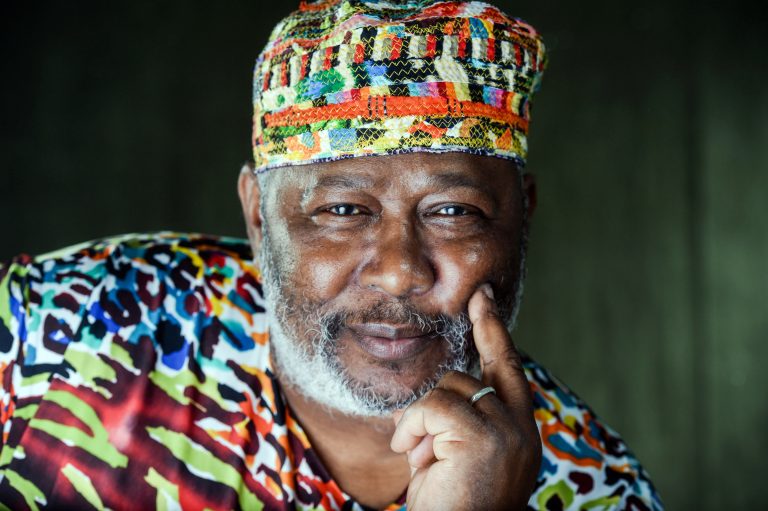
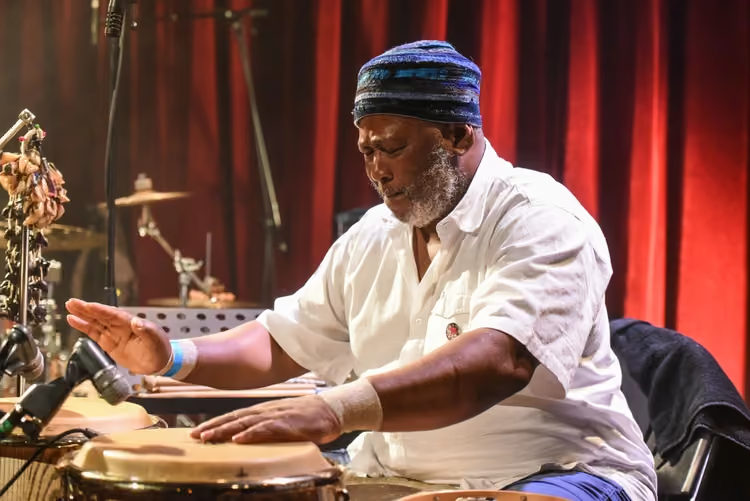


Workshop by the Racine Caraïbe Collective
Their workshop, organized into various sessions of musical instruction and practice, is dedicated to Guadeloupean dance, specifically the Toumblack, one of the major rhythms of the Gwo-ka repertoire. Extremely popular, the Toumblack is today one of the most widely practiced rhythms and the most accessible to the public. Characterized by its energy and its ability to bring people together, it naturally invites dancing and interaction among drummers, singers, and dancers. Its vitality and festive spirit make it a true gateway to discovering Gwo-ka.


Dates and times
Sunday, October 11, 5:00 p.m. to 6:00 p.m.

Address
Marseille Wharf, Eure Basin
The workshops will consist of 3 sessions, each lasting 20 minutes
First Session:
Facilitated by René Burin, Gildas Lutin, and Roger Raspail
Discussion and practice of Gwo-ka rhythms
Kalaja and Mendé, a traditional rhythm from the Gwo-ka repertoire that is technically accessible
Songs: learning Gwo-ka choruses and call-and-response
Boula Gel: a rhythmic practice that involves playing the drum with the voice in the form of onomatopoeia
Second Session:
Hosted by Annette Nicolas
Traditional dance of Guadeloupe (Gwo-ka)
Toumblack and Mass in St. Jen:
The Toumblack is a dance that is both festive and a form of protest; it has the merit of bringing people together. In the past, during the sugarcane harvest, it served as a rallying cry for workers’ demands, a rallying signal for strike movements, and was also performed during various ceremonies.
The Mass in St. Jen:
The rhythm of the carnival parade in Guadeloupe
Third Sessions:
Yanvalou:
Hosted by Nerlande Bazelais, Jean-Mary Louissaint (Kébyesou), and Roger Raspail.
Traditional Haitian Rhythm
The Yanvalou is a mesmerizing voodoo ceremonial dance performed during gatherings centered around the deities and led by voodoo priests, known as Ougan.
It is a very complex ternary rhythm, characterized by its intricate drumbeats and tonal quality, and is accompanied by religious chanting.
The Racine Caraïbe collective is made up of six artists—three women and three men.
Annette Nicolas: Vocals, Percussion, and Dance; Gildas Lutin: Lead Vocals and Dance; Nerlande Bazelais: Backing Vocals, Percussion, and Dance.
René Burin on boula drum and backing vocals, Jean-Mary Louissaint on lead vocals and Haitian drum, and Roger Raspail on mawkè drum and backing vocals.
The project is led by Roger Raspail, a percussionist, state-certified traditional music teacher, and winner of the award for Best French Percussionist for the 2023–2024 season, as named by Jazz News and Jazz Magazine.
The Collective has performed at numerous venues and festivals in France and across Europe, demonstrating its solid experience in live performance and cultural initiatives.
Concert at the Maison Européenne de la Photographie in Paris’s Marais district for the Afrikada Journal, the Malakoff Arts Center, Le Cabaret Sauvage at Porte de la Villette, the Cité de la Musique, the Philharmonie de Paris at Porte de Pantin, the “La 1ère la Fleur Belle de Mai” Festival in Marseille, the Mougins City Center for Photography for the “Black Is Beautiful” exhibition, Metro 54 in Amsterdam, the Netherlands, and at the Tamanoir in Gennevilliers.
Through its productions, the Racine Caraïbe collective celebrates the musical and choreographic traditions of the islands in a spirit of sharing, passing on traditions, and connecting with audiences.
Members of the Racine Caraïbe Collective
Roger Raspail: has never compromised his originality in the slightest, starting with the seven rhythms that define the identity of the gwo ka, the drum that is his island’s trademark. Roger Raspail has collaborated with many renowned artists such as Pierre Akendengué, Cesária Évora, Chico Freeman, Papa Wemba, Kassav...
Nerlande Bazelais— choreographer, dancer, singer, and performer—also plays traditional Haitian instruments such as the vaksin, also known as the kònè, the conch shell, and the drum.
Annette Nicolas: Annette Nicolas is a singer from Guadeloupe, originally from Capesterre-Belle-Eau.
Together with a collective, she spearheaded the effort to have Gwo Ka inscribed on UNESCO’s Intangible Cultural Heritage list. She has worked with numerous groups and artists in the traditional arts scene. Annette is also an excellent Gwo Ka dancer, deeply rooted in this culture.
René Burin: René Burin is a percussionist from Guadeloupe who specializes in the Ka drum. He is recognized as one of the best Guadeloupean Boula musicians living in Paris. A solid and generous accompanist, he collaborates with numerous musicians and ensembles, providing an essential rhythmic foundation that remains true to the Gwoka tradition.
Gildas Lutin: Rooted in traditional values, she continued to sing and practice gwo ka upon her arrival in France. She joined the Nou K Bay (NKB) association, which aims to pass on the culture of ka to generations of Guadeloupeans born in France.
Jean-Marie Louissain, known as Kebyesou: Haitian percussionist and master drummer of Voodoo ceremonies. Self-taught, Kebyesou is described as a precocious talent with a keen sense for percussion. He is considered one of the most talented musicians of his generation.
