.webp)


Bal Moderne
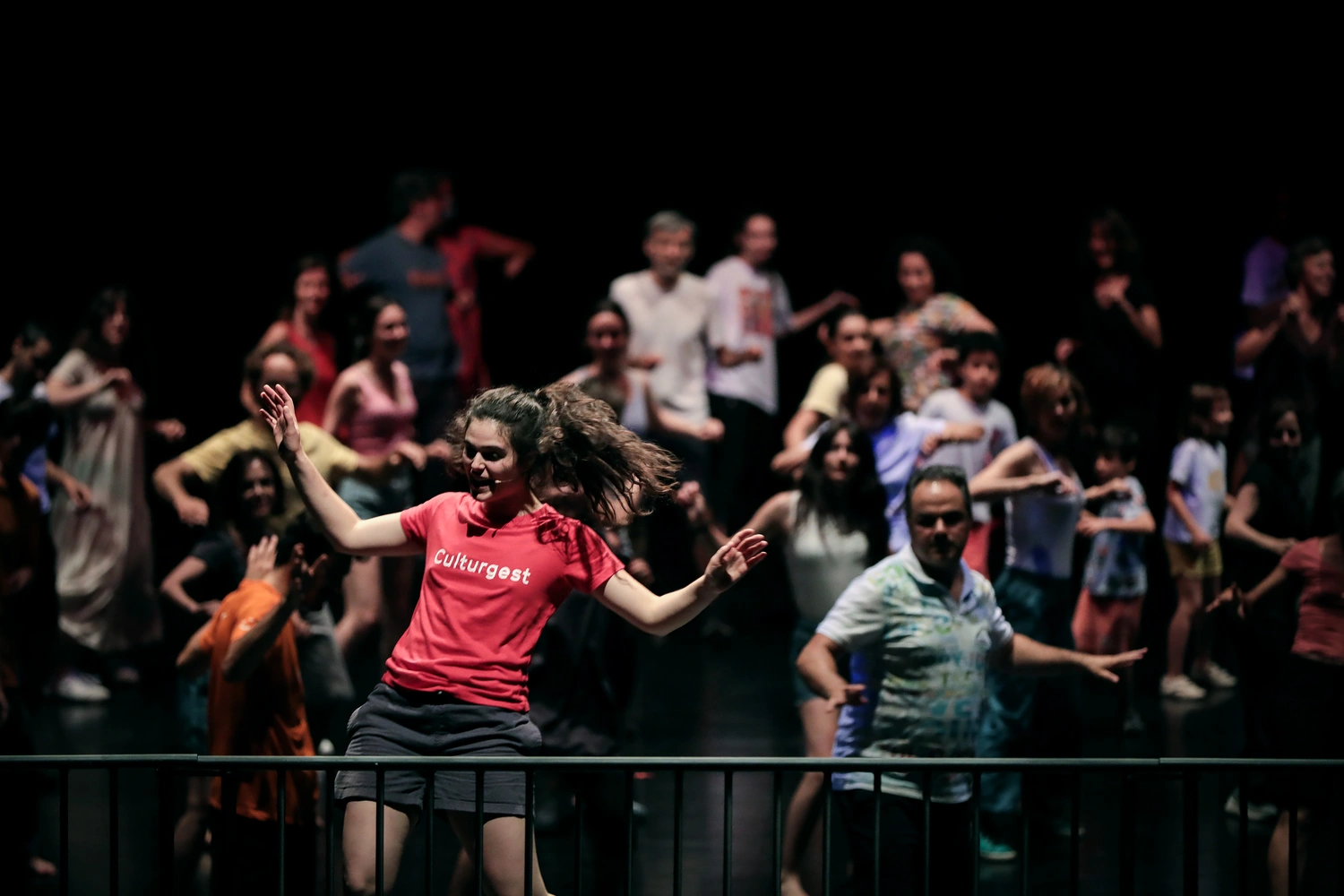
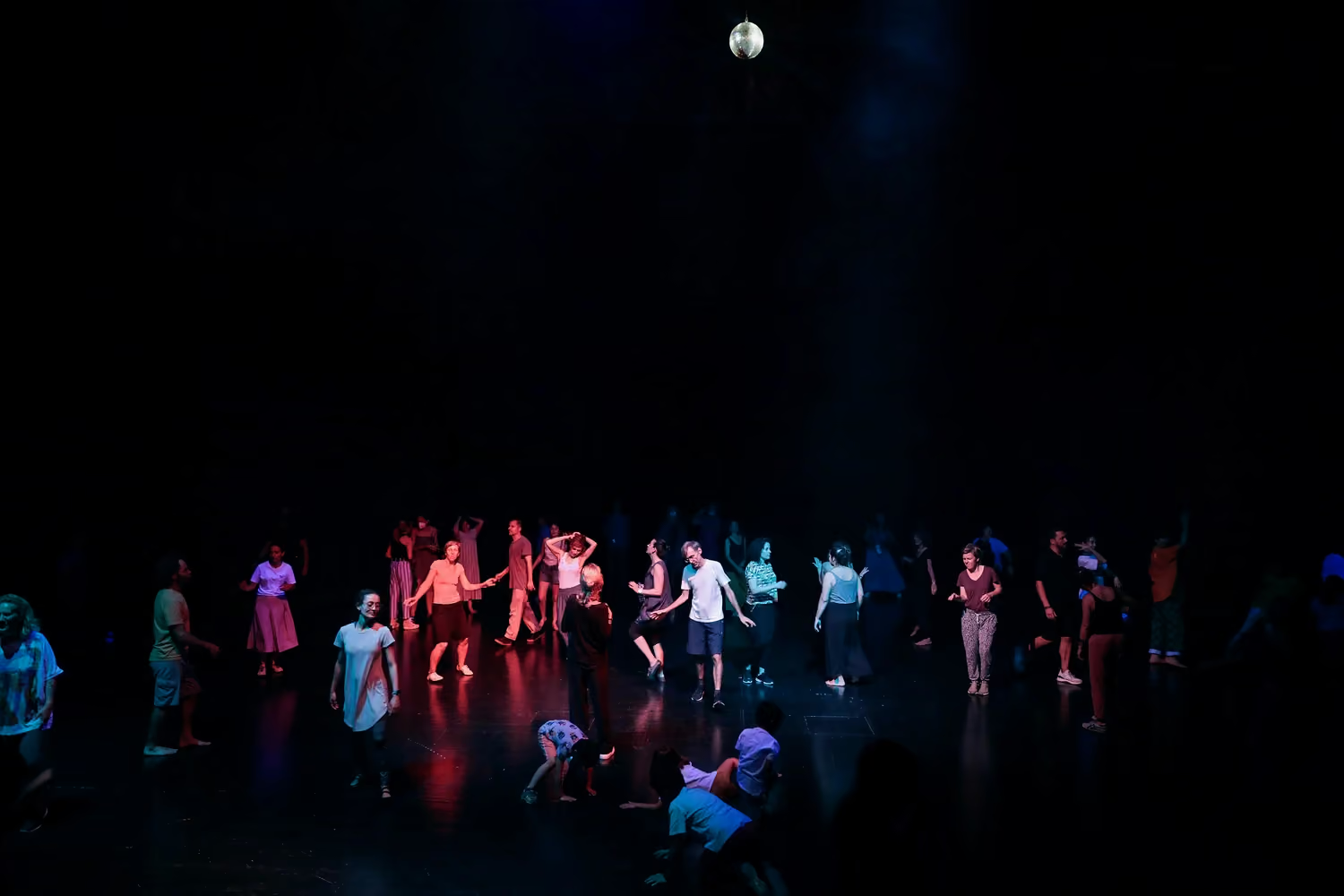
A contemporary dance event where everyone is invited to take part in a lively and joyful late afternoon full of movement. The audience learns, in just a few minutes, choreographies created by international artists, becoming performers themselves. Between learning and celebration, this collective format dissolves the boundaries between stage and audience, fostering connection, sharing, and the discovery of contemporary dance through direct experience.


Dates and times
Thursday, June 25, from 6:00 p.m. to 8:00 p.m.

Address
Cascais Marina

Accessibility
Accessible to people with limited mobility (outdoor performance)

Additional Information
Free entry. Booking in advance is recommended; plan to arrive 15 minutes early to secure your place. Walk-ins are welcome subject to availability.
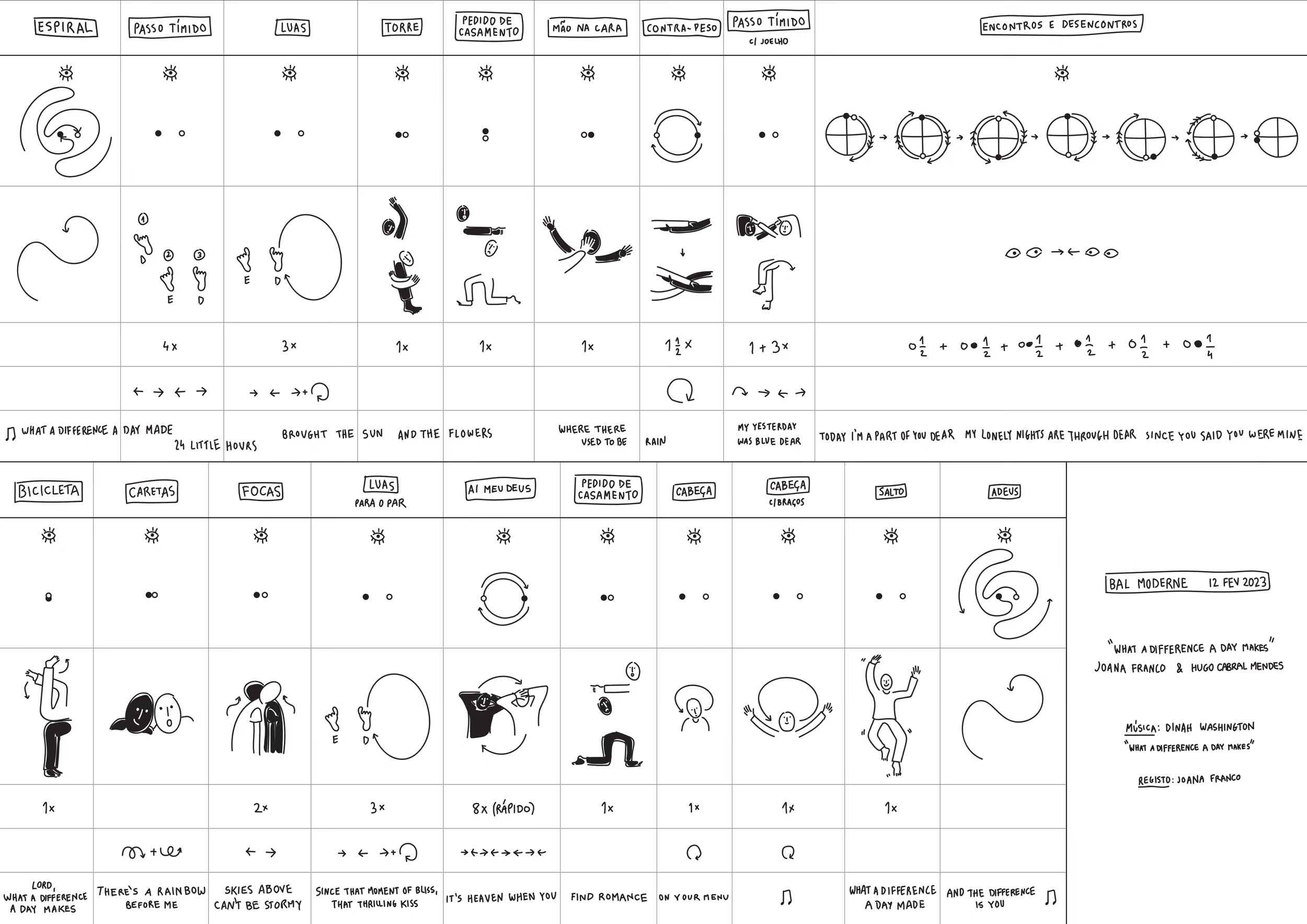
The Bal Moderne is a participatory dance concept created in 1993 by Michel Reilhac in Paris, with the aim of making contemporary dance accessible to everyone, regardless of prior experience. Based on the idea of rapid learning and shared pleasure, this format involves the transmission of short choreographies—usually around three minutes long—created by guest choreographers and accessible to any body. Throughout a session, the audience collectively learns these sequences and performs them together in a festive atmosphere.
Presented in several countries, Bal Moderne arrived at Culturgest in 2005, where it has had multiple editions. Particularly notable is the 2018–2019 anniversary edition, which was part of the celebrations of Culturgest’s 25th anniversary.
In this adaptation, the choreographies are created by young choreographers from the Portuguese contemporary dance scene, whose practices engage with collaboration and audience participation. Designed for intuitive learning, they transform the audience into active performers, dissolving the boundaries between stage and audience. Between moments of transmission and practice, a space of collective experimentation emerges, where encounter, listening, and the synchronization of bodies generate a temporary community. This is a shared choreographic experience that combines artistic mediation, contemporary creation, and active participation.
© Bruno Simao
Hugo Cabral Mendes
Hugo Cabral Mendes, born in 1999, graduated in dance from Projeto Quorum at Academia Quorum Ballet. He is currently pursuing a Master’s degree in Choreographic Creation and Professional Practices at the Escola Superior de Dança in Lisbon.
Since 2018, he has worked as a performer with Raimund Hoghe, Aldara Bizarro, Diana Niepce, Daniel Matos, Adriana Sá Couto, Rodrigo Teixeira, Miguel Moreira, and Marco Martins, among others.
As a creator in the performing arts, his children’s show A Maior Flor do Mundo (“The Largest Flower in the World”), co-created with dancer Inês Gomes, has been touring since the celebrations of José Saramago’s centenary in 2022.
As a solo creator, he made his debut in 2023 with O SER INUMANO at the Cumplicidades Festival (Lisbon), and in the same year created O Campo das Cebolas in Serpa, at Musibéria. He was also one of the choreographers of Bal Moderne Culturgest Lisboa, contributing two choreographies for the community project.
At the invitation of The Gate, Marvila, he presented the installation Cartas para a Nuvem (“Letters to the Cloud”) in 2024. In the same year, he presented the solo Cartas de um Bailarino para a Nuvem (“Letters from a Dancer to the Cloud”) in Catalonia, at L’Obrador in Deltebre.
He is currently touring his latest work This Is Only About Dance or Cartas para a Nuvem, which premiered in March 2026 at Teatro-Cine Torres Vedras, concluding the Cartas para a Nuvem triptych begun in 2024. As a performer, he premiered in September 2025 at the Amsterdam Fringe Festival in the new creation by artist Fernando Troya, A PELO.
Hugo’s research focuses on the notion of living in a state of falling, the relationship with pain and the ground, and the queering of the male body through reflections on fraternity, equity, and freedom.
© Joana Franco
Joana Franco
Joana Franco holds a degree in Dance (2019) and a Master’s degree in Choreographic Creation and Professional Practices (2023), both from the Escola Superior de Dança. Her practice unfolds within the field of expanded choreography, focusing on the intersection between the graphic and the choreographic.
Within this framework, Kaput! (2023-2024) stands out as a project conceived as a prototype of choreography, presented in the form of a lecture-performance and as a “choreo-graphic” laboratory at Centro Cultural de Alfena, Casa Cheia, Galeria Zé dos Bois, and Espaço Cultural das Mercês.
Parallel to her artistic work, she develops projects in graphic design and web development for the cultural sector.
Throughout her career, she has collaborated with various institutions and artists, including Lara Maia, Joaquim Leal, Francisco Miguel, Coletivo TETO, Culturgest, Estúdios Victor Córdon, and Plano Nacional das Artes. She has also worked in communication for projects by Biloba, Duarte Ventura, Estela Alexandre, DINÂMIA’CET-Iscte, and the SocioDigital Lab for Public Policy.
Marta Jardim
Marta Jardim (Portalegre, 1995) is a dancer and choreographer. She develops her work as both creator and performer in multidisciplinary projects spanning contemporary dance, theatre, music, and film. Her artistic practice takes contemporary dance as a starting point to explore themes that call for critical reflection on society and the construction of a more just world.
She holds a degree in Dance from the Escola Superior de Dança and participated in the Erasmus+ programme at TEAK – Theatre Academy of Helsinki, as well as the FOR training programme of Companhia Olga Roriz. She also began her artistic path in music, having completed Grade 8 in classical saxophone. In 2018, she undertook internships with LINGA Compagnie in Lausanne (FLOW) and with Companhia Olga Roriz (Autópsia).
Her creations include TravessiaS, presented at the Small Auditorium of CCB (2020), and VITAL_Solo à morte de um carregador (2022), a reflection on the impact of virtual life on mental health. In 2023, she joined the Jovens Compositores programme at Estúdios Victor Córdon.
As a performer, she has collaborated with choreographers such as Madalena Vitorino, Olga Roriz, Filipa Francisco, Marina Nabais, and Jérôme Bel, among others, as well as with theatre and film artists including Júlia Buisel, Francisco Manso, Rui Simões, Ricardo Cabaça, and Fátima Reis.
© Bruno Simao

The artists