
.webp)


Choir Praska
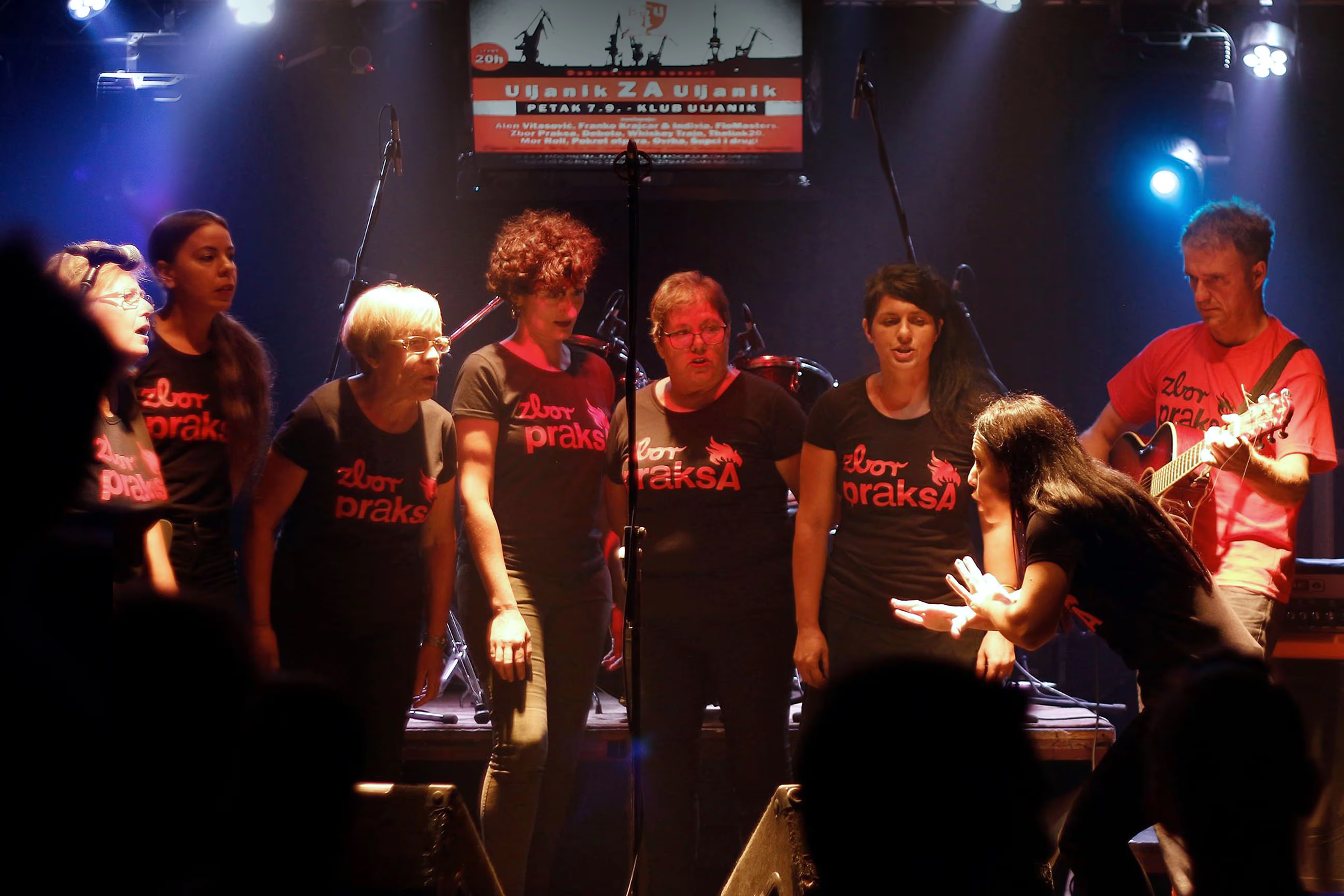
The choir Praksa nurtures antifascist values through music, performing songs that promote class solidarity and the overcoming of national barriers. Such songs have been empowering the marginalized and oppressed for centuries, advocating for a fairer life. Since the choir’s founding in March 2014, we have held over 200 performances in Croatia, Slovenia, Serbia, North Macedonia, Italy, Austria, France, Sweden and Spain.

Dates and times
Saturday, September 13, 8:30 pm to 9:20 pm

Address
Karolina Riječka Pier
We have released two albums and one songbook, and we are working on a third album dedicated to the militant repertoire of maestro Nello Milotti. This year, the choir celebrates its tenth anniversary – a decade of loud and unyielding resistance through song.
The idea of founding the choir emerged from a concrete social struggle – out of solidarity with the workers of knitwear factory Arena trikotaža and other affected collectives in Pula. The song Sebben che siamo donne, spontaneously sung at the time, became a symbol of resistance and the starting point for creating a choir that would gather people around the ideas of equality, freedom, and justice. From the start, Praksa was envisaged as a tool for social change, as a space where community is built through voices, and struggle is led by melody.
.avif)
©Photo Dejan Štifanić
Today, eleven years later, Praksa is not just a choir – it is a movement, a community, support, the voice of those who often have no place to tell their story. Without political affiliations, self-organized and joined in solidarity, the choir members persistently create a space where song becomes an act of resistance and remembrance, but also of hope. Their practice – in true sense of the word – becomes a model and encouragement for others to build a better world through song and solidarity.
©Photo Anna Gaspotić
Edna Strenja
Edna Strenja is the founder and conductor of the choir Praksa from Pula, Croatia. Since the choir’s establishment in March 2014, Edna has led workshops on protest songs in Toulouse (France), Malmö and Lund (Sweden), Vienna (Austria), Pula (Croatia), and New York (United States). She arranged the choir Praksa’s first two albums of protest songs, released in 2019, as well as Praksa Sings Mondine from 2022. She is currently working on the choir’s third album titled Struggle in the Songs of Nella Milotti. Besides protest songs, she has a particular interest in folk songs, especially those from the Balkan region. To deepen her knowledge, she has attended training at the EECF in New York, with maestro Stefčet Stojkovski in Macedonia, and with maestro Aleksandar Saša Karlić at the Venice Conservatory. Together with musician Dario Marušić, she participates in the project Musica affrescata, performing medieval songs on instruments depicted in frescoes found in medieval churches in Istria. She collaborates with international choirs and musicians.
©Photo Zlatko Gotovac
