.webp)
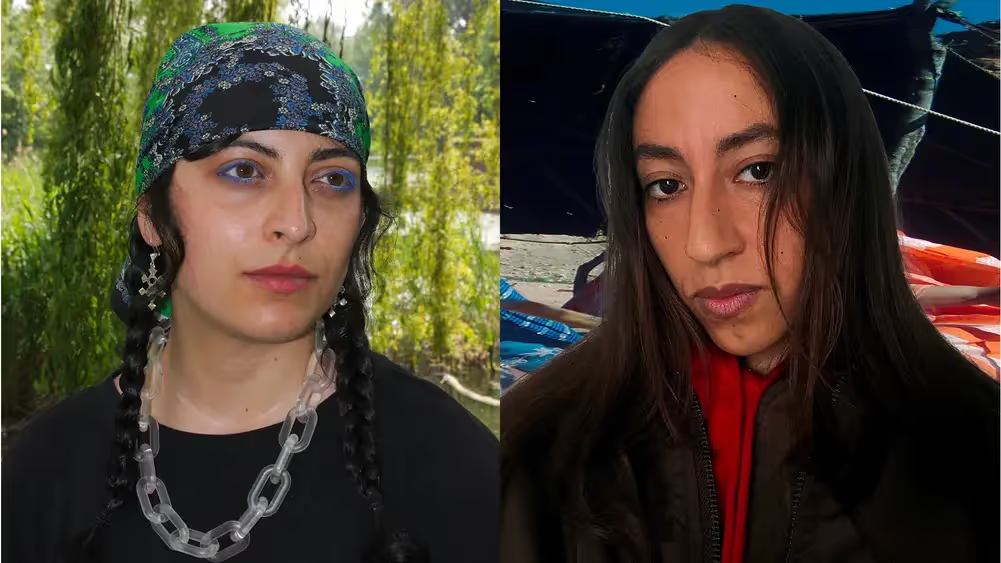


My continent of Africa, Beware the vampires قارتي أفريقيا، احذري مصاصي الدماء
The show takes its title from a song by Ibrahim Hesnawi, a Libyan reggae pioneer who started a musical movement that suffered political violence after Gaddafi's "Cultural Revolution" in the 1970s, when music was produced exclusively to serve the ideological propaganda of the state. The collaboration between Libyan artists Tewa Barnosa and boo.m is a sonic quest to explore reggae as a site of resistance in a time when pan-African solidarity is eclipsed and punished by imperial systems.

Dates and times
Thursday, April 2, 9:00 p.m. to 10:00 p.m.

Address
Moll de Barcelona, Port Vell (Port of Barcelona). Scene.
In the absence of agency over fragmented narratives, how do anti-fascist rhythms resist and reveal the roots of oppressive systems? Through sound and image we further inquire into the imperial profiting from a neocolonial industry, which operates between the Sahara desert of Libya and the borders of the Mediterranean sea.
The audiovisual performance examines the spatial convolution and temporal rupture in connection to the often complexified socio-political landscape of Libya. While African indigenous music was banned, artists were exiled and instruments were burned in public squares, Ghaddafi was capitalising on Pan-African propaganda as an ideological means to strengthen his position on the continent, however, the spirit of African unity had already existed across generations amongst its people. The exploration of Arabic speaking Reggae in Africa, folkloric Libyan music and oral poetry, sampling and field recordings conducted in Tripoli, transforms into a soundscape that lives through an original soundsystem handmade by Azadi collective, giving homage to the sonic resistance movement in post-war Jamaica, that played a pivotal role in shaping music culture worldwide.
Voice, archived footage and manipulated CGI imagery, render visible and audible a narration on what has been erased from the public eye – the engineering of the European colonial projects feeding on Libya as an infrastructure of the military industrial complex resulting in the orchestrating of militias, mercenaries, proxy/civil war, land extraction and detention centers.
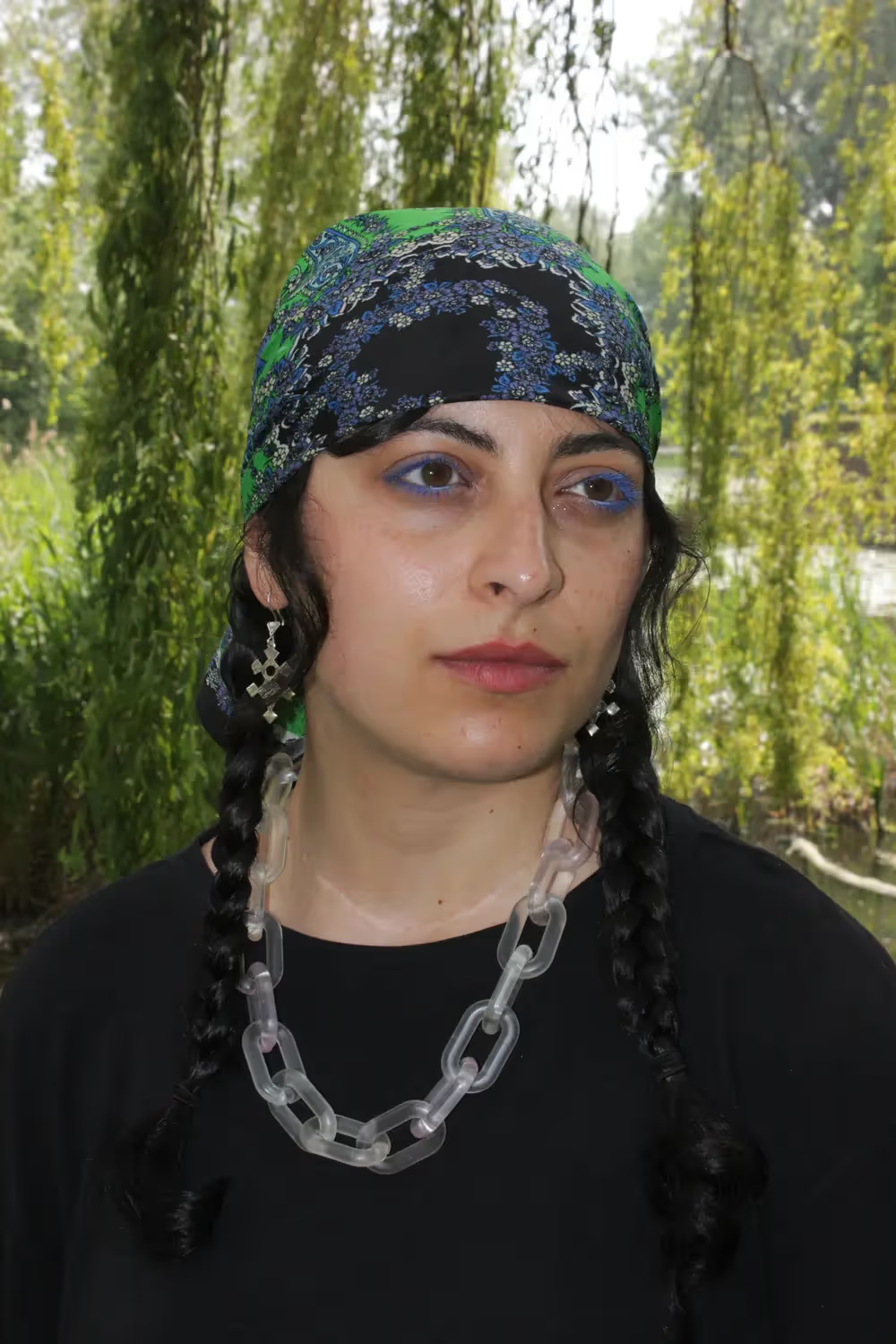
Tewa Barnosa (by Pedram Sazesh)
Tewa Barnosa
Tewa Barnosa (Libya, 1998) is an interdisciplinary artist and cultural worker living and working between Tripoli and Amsterdam, her practice spans visual arts and time-based media such as film, sound, performance, and curatorial collaborations. In her work, she investigates historical and contemporary warfare tactics and theatrics in relation to ecological ecosystems, and exploitation of people, land and resources. An inquiry into language, technology, visual and sonic culture as anti-colonial modes of communication. Through working with image making, video, voice, games and objects, she explores absent and counter archives, Bedouin and Amazigh oral literature and music, fiction and political imaginaries. Often to interweave narratives in resistance to systems of alienation while centering generational knowledge.
boo.m
boo.m (Libya,1990) challenges the power of sound and image as a safe space for imagination. Her work focuses on themes of panafricanism, transculturality and migration, spiritual practices and the multiple dimensions of musicology. While studying the complexity of the human experience, she is committed to documenting movements and communities with whom she shares visions and values, as well as processing historical archives in quest of interconnections throughout space and time. Alongside her audiovisual projects, she works in community organising with local groups in Barcelona, centering matters of social and political justice through events, workshops and collective actions.
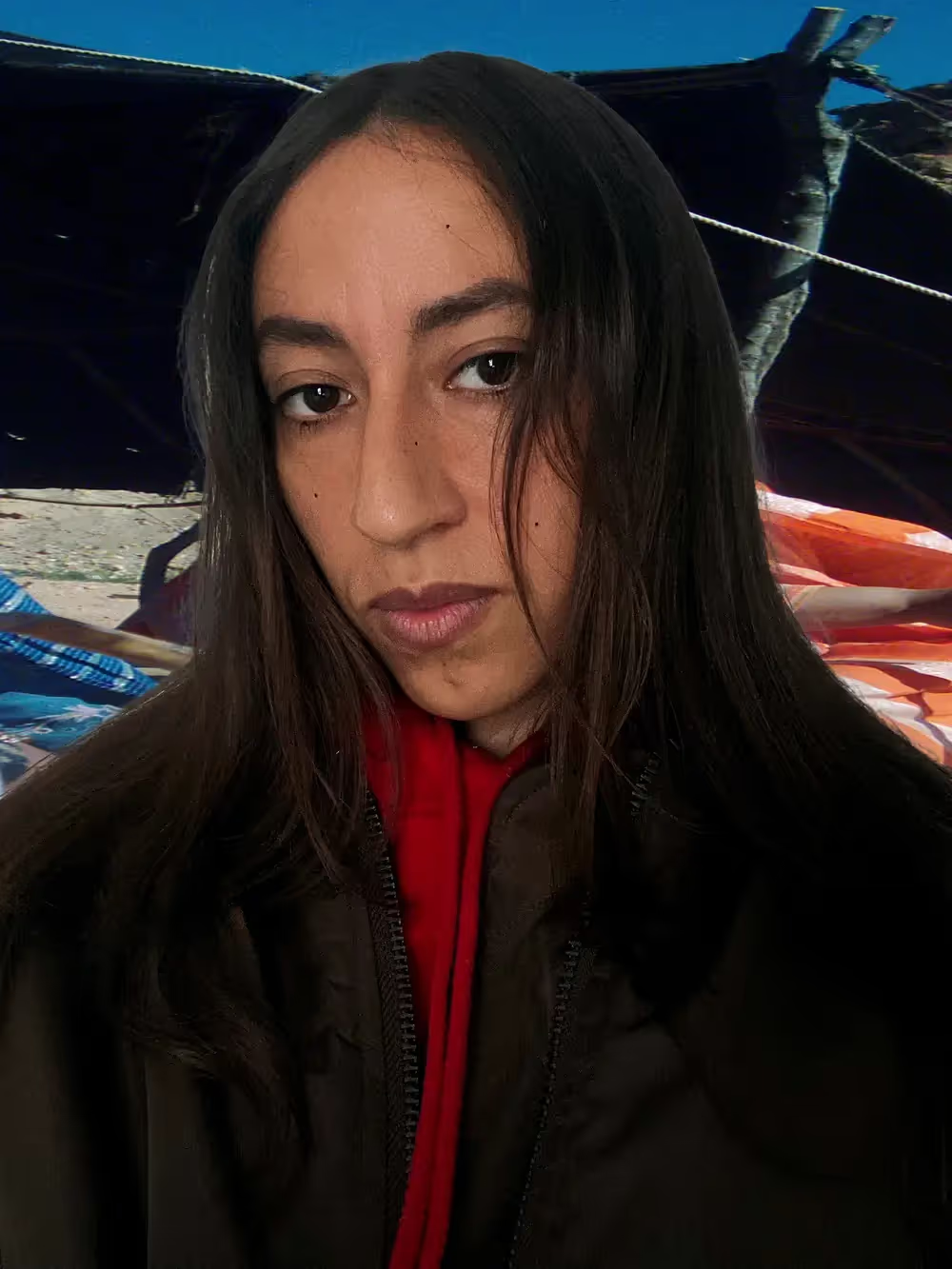
boo.m (Courtesy of the artist)
