
.webp)





On the Shores of Homer
*Verse from “Axion Esti” by the Nobel Prize-winning poet Odysseas Elytis. The Odyssey meets the musical tradition of the islands. In the universal history of the written word, the Homeric epic has always been a constant point of reference. There is no author or poet of major or even minor importance who has not been inspired or influenced by the rhapsode's work. Many other stories have fallen into oblivion, many adventures sunk. But the Homeric epic has not ceased to be sung in antiquity, in Byzantine times, right up to recent times. These sung verses express the gradual path to virtue, the thread that connects each man with his soul and then with the divine.

Dates and times
Saturday, October 11, 9:30 - 10:30 pm

Address
Port of Piraeus, Gate E8
The map of the Odyssey shows the wanderings of Ulysses and his companions in known countries, such as the coast of Asia Minor, the islands of the Aegean Sea, but also to countries that, although they appear to be imaginary, are probably identified with the shores of present-day Tunisia (Lotophages), southeastern Sicily (Lestrygons), the Strait of Messina (Sirens) or Corfu (the island of the Phaeacians).
The Odyssey is an epic poem sung in ancient times by aedists. Musical instruments of the time accompanied the singing. The aede tells the story of Odysseus' adventures as he embarks on his journey back to his homeland of Ithaca after the Trojan War. The epic describes the adventures and character of the main hero.
Although the Odyssey takes place on the geographical confines of the Mediterranean, it is a work whose plot concerns the whole of humanity. In the universal history of the written word, the Homeric epic has always been a constant point of reference. There is no author or poet of major or even minor importance who has not been inspired or influenced by the rhapsode's work.
Many other stories have fallen into oblivion, many adventures sunk. But the Homeric epic has not ceased to be sung in antiquity, in Byzantine times, right up to recent times. These sung verses express the gradual path to virtue, the thread that connects each man with his soul and then with the divine.
Homer is a poet par excellence, not a geographer. His verses are a hymn to universal values, using metaphors and comparisons that have never been equaled. For the poet, geographical location is not defined by coordinates on a map but by the coordinates of the mind and heart.
The text was adapted by the award-winning writer Vassiliki Nevrokopli into decasyllabic verse, the most popular poetic form in Greece. The result is a charming work in which Homer's archetypal text meets recent musical tradition, taking us on a journey to the beautiful shores of Greece and the Mediterranean.
Courtesy of the artist
Aedus: an artist who sings their own works accompanied by a musical instrument.
Rhapsody: an instrumental piece of epic poetry.
Rhapsode: an artist who recites or sings, often an epic poem written by someone else.
Epic: describing an epic poem, an impressive heroic adventure.
Decapentasyllabic: fifteen syllables.
Line Up:
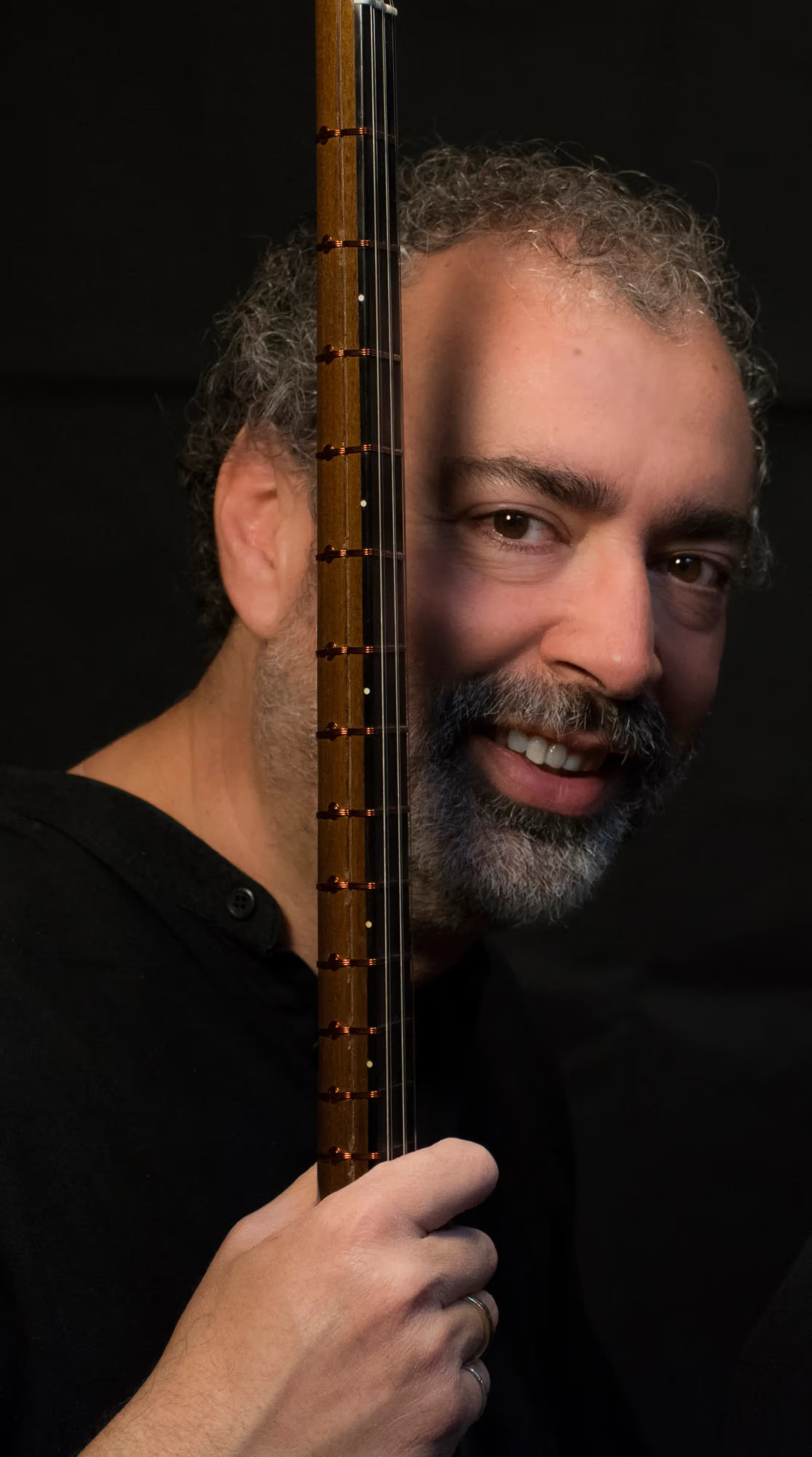
Irini Derebei: voice, Cretan flutes
Kyriakos Kalaitzidis: oud, vocals
Karolos Kouklakis: laouto, boulgari
Vassiliki Nevrokopli: narrations
Courtesy of the artist
