
.webp)
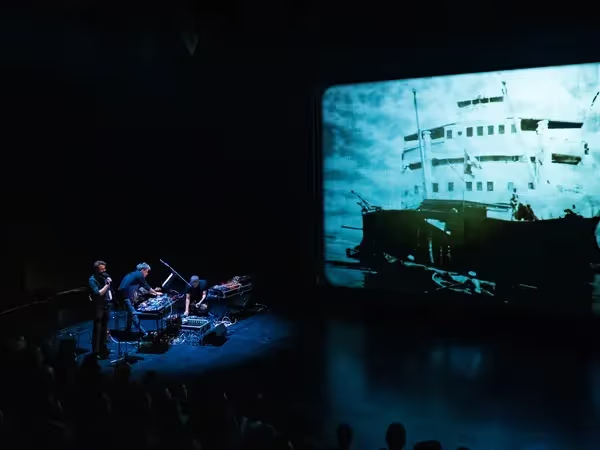
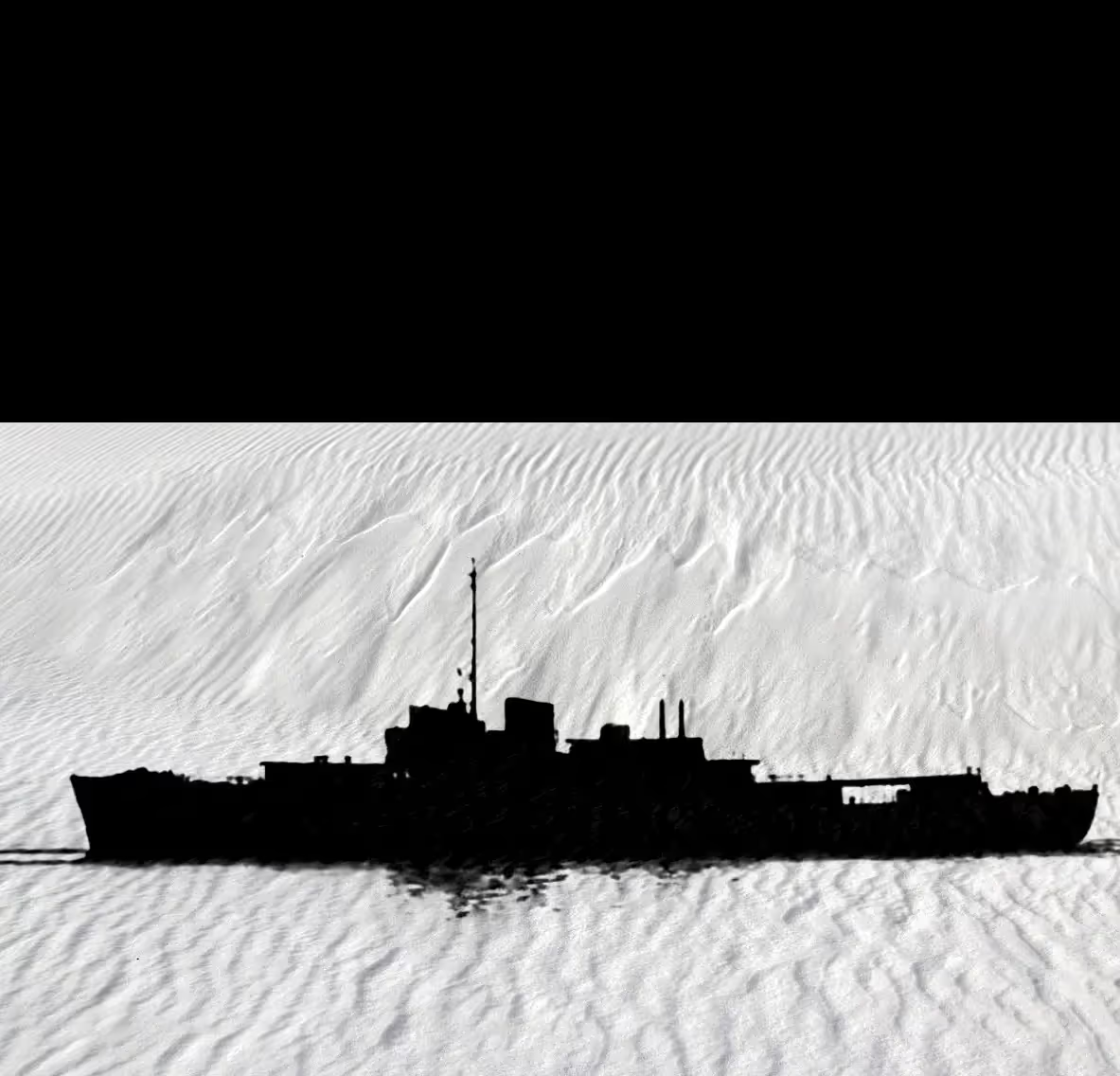

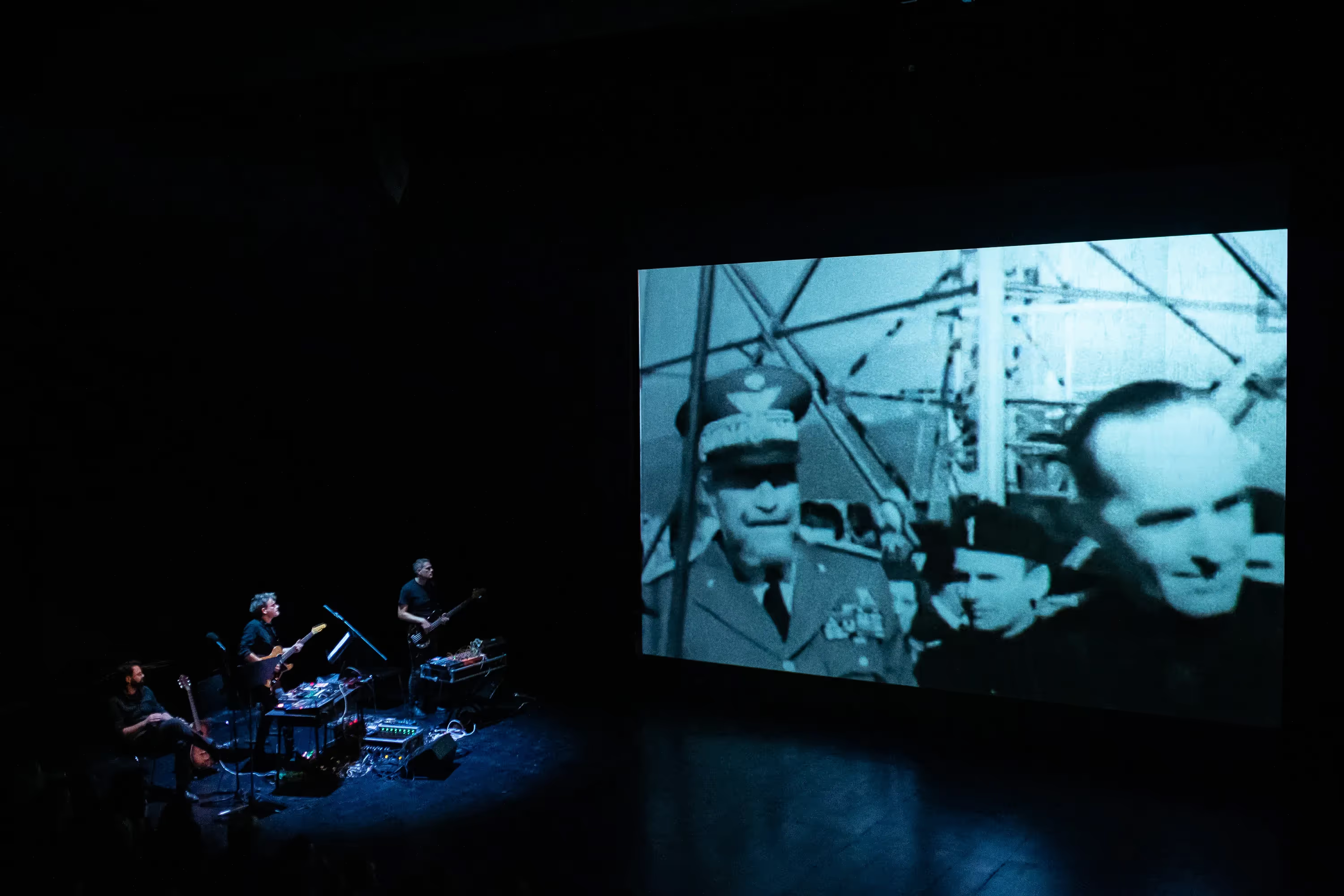

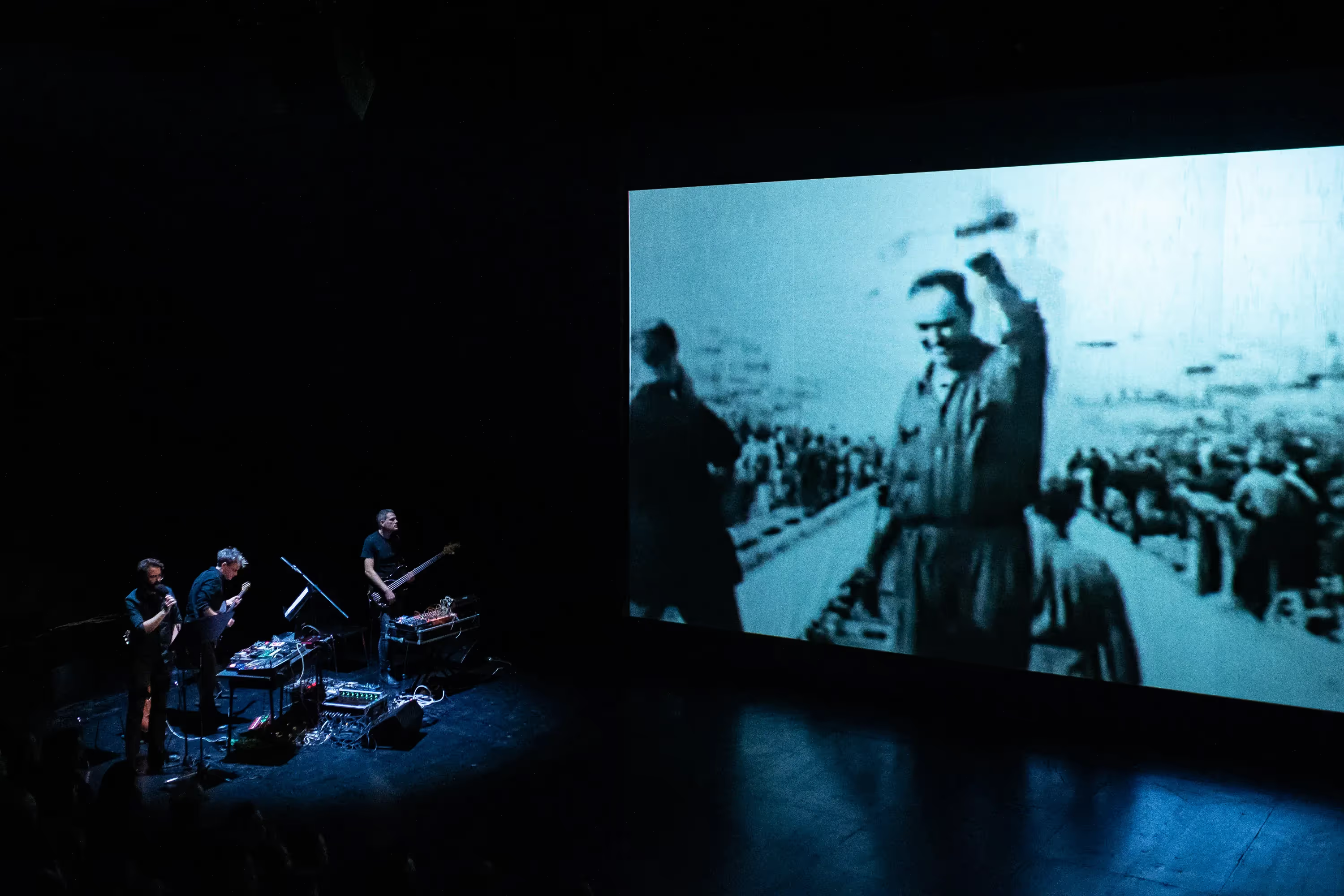


Propulsor - Score for the ship Galeb
This propulsor is not merely a propeller that converts engine power into the thrust that drives a ship forward. It is also the force with which this vessel sails diachronically from the Ligurian Sea to the Adriatic, the Ionian Sea or the Suez Canal. The propulsor is the dead time of the ship at the bottom of the sea; propulsor is the ship’s body, which symbolizes peace, simultaneous rupture and riveting, its sinking and resurfacing. The propulsor is the arrested propeller at the heart of a tertiary economy. The propulsor is a future attraction.

Dates and times
Sunday, September 14, 8:00 pm to 9:00 pm

Address
Karolina Riječka Pier
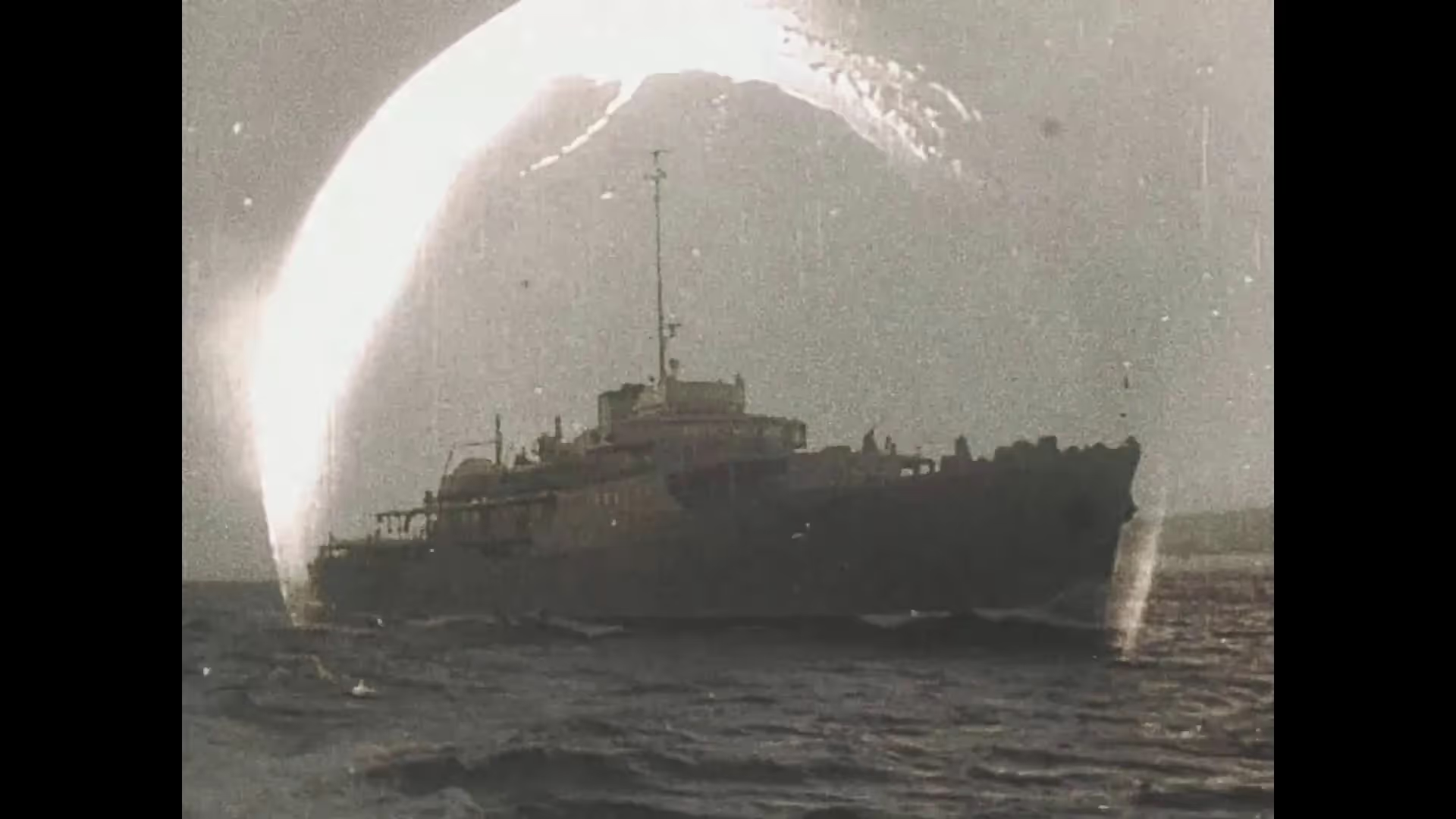
The clang of rivets being driven into sections melds with the thud of dozens of hammers striking the hull. In the ship’s stern, four workers are repairing the shaft where a new propeller will be installed in a month, while painters test the first coats and search for the right shade for a vessel that was originally meant to bear the name Mornar (The Sailor). They call out to one another, sip wine during breaks, the workers from Monfalcone, Italy, are still grappling with the language. The ship they are working on is no stranger to them – fifteen years earlier, they built its two “sisters”. Such scenes were likely common in the Uljanik shipyard in the early 1950s, when it became clear that another city was growing in Pula. In the dry docks of this city-within-a-city – Uljanik – extensive works are nearing completion on the training ship Galeb, later remembered as a “ship of peace” and a “ship of friendship” in the context of Yugoslavia’s Non-Aligned Movement. In our search for the sounds and images woven into the history of this vessel, we discovered not only an array of crackles, noises and vibrations as they can still be heard on deck, but also realized that in visualizing its past, one encounters far more than “picture-perfect postcards”. Built during the Fascist era to meet the needs of a colonial economy, RAMB III was the third of four sister ships designed to ply the waters between Italy and its occupied African territories. The bark of commands, the tone of racism, the cries of punishment – and, ultimately, the belligerent roar of a poisoned nation, would draw this cargo ship into its maelstrom.
That is why the sound and silence of its ruptures became important to us. And there was no shortage of them. How else to interpret the true Odyssey that began in the Libyan city of Benghazi, when the RAMB III lost its bow and had to navigate stern-first all the way to Trieste? What kind of cry did the then-mutilated and wounded macchina bellica navale emit? Moving images demand sound. However, underwater sound cannot yet be fully recorded. The hydroacoustics of such a pivotal moment in the ship’s life must be reconstructed from underwater footage, in much the same way a human face can be carefully and speculatively recreated from the contours of a skull. Only in this way will we be able to understand the full scope of the event woven into the creation of the symbol of the “ship of friendship”. Only when we hear the hiss of underwater welding and the breathing in a heavy diving suit, the timbre of a kind of "industrial dialect", will we be able to understand the shared grammar of the language of non-alignment. Before Gamal Abdel Nasser, Indira Gandhi and Josip Broz Tito, it was Vlado Kokezar, Vicko Lapov, Skopazzi, Bonifačić and Filčić who stayed underwater on the future ship Galeb in a series of attempts to raise it from the seabed of Rijeka. In the fertile waters of Rijeka, these diver-obstetricians brought the ship back to the surface and handed it over to the workers of Uljanik, who would prepare it both for service as part of the naval training fleet and for its symbolic role in the young socialist federation. A propulsor is, therefore, not merely a propeller that converts engine power into the thrust that drives a ship forward. It is also the force with which this vessel sails through time from the Ligurian Sea to the Adriatic, the Ionian Sea or the Suez Canal. The propulsor is the dead time of the ship at the bottom of the sea; propulsor is the ship’s body, which symbolizes peace, simultaneous rupture and riveting, its sinking and resurfacing. The propulsor is the arrested propeller at the heart of a tertiary economy. The propulsor is a future attraction.
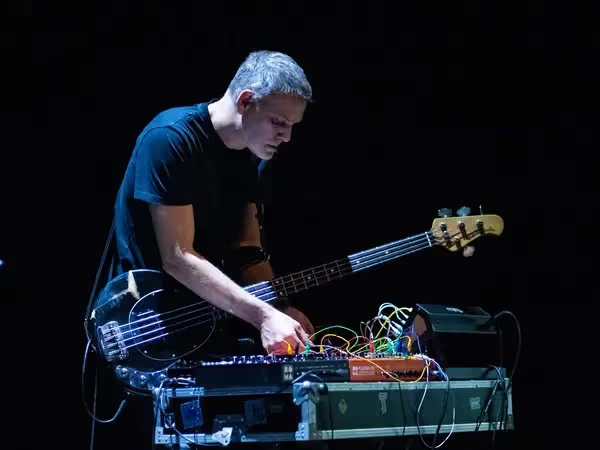
Alen Sinkauz: music
Nenad Sinkauz: music
Andrea Matošević: research, concept and text
Vladislav Knežević: film concept and direction
Miodrag Gladović: multichannel audio setup, sound design
Mario Kalogjera: image editing and processing
Hrvoje Pelicarić: sound engineer
Voices: Sarah Nagaty and Mara Matošević
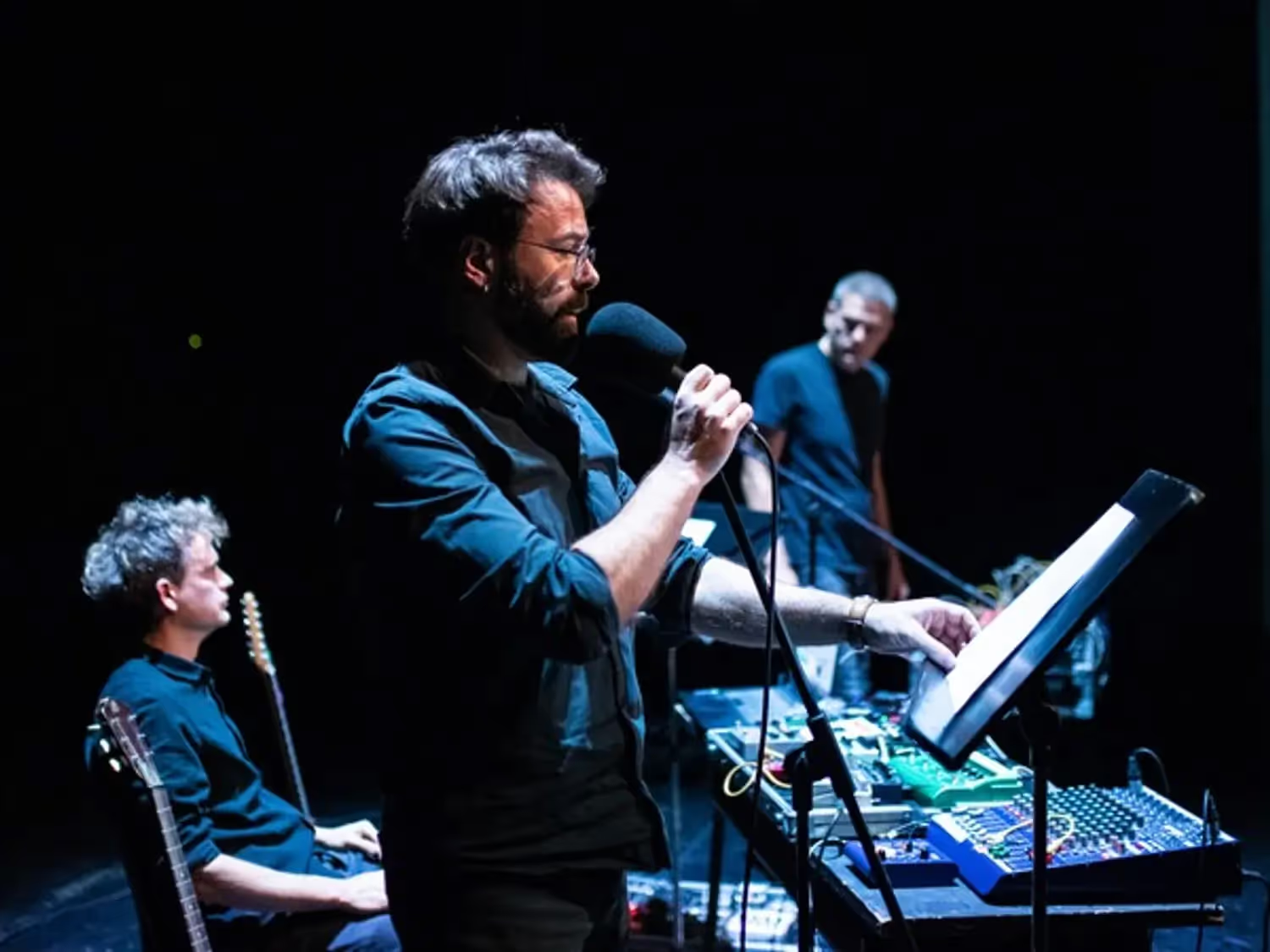
Nenad Sinkauz is an ethnomusicologist, composer and performer, the winner of five “Zlatna Arena” Awards for film music at the Pula Film Festival. He is currently researching MIDI mapping of the electric guitar and taking part in numerous audio-visual, theatre and concert performances.
Alen Sinkauz is an ethnomusicologist, composer and performer, the winner of five “Zlatna Arena” Awards for film music at the Pula Film Festival. He composes and designs sound for musical stage productions, dance and theatre performances, as well as radiophonic, site-specific, and multidisciplinary performances.
Miodrag Gladović holds a degree in electroacoustic engineering and works as a musician, music producer, and multimedia artist. He collaborates with numerous Croatian and international artists as a sound designer and participates in the technical realization of multimedia and interactive art installations.
Mario Kalogjera is a performance animator and visual designer. He has extensive experience in post-production of numerous projects, including animated, experimental, and short 3D stereoscopic films, which he created for the national television (HRT), Zagreb Film, Bonobo Studio, and Kinorama.
Andrea Matošević is a university professor and researcher in the fields of ethno-anthropology, cultural studies, history, and philosophy. He has published several dozen scientific research papers and six monographs. His last monograph is titled Kolos Jadrana. Industrijski film i brodogradilište Uljanik u drugoj polovici XX. stoljeća.
Vladislav Knežević medijski je umjetnik i redatelj. Primarno se bavi audio-vizualnim istraživanjima i kreira radove koristeći se snimljenim videomaterijalom, digitalnom fotografijom, mikroanimacijom, stereoskopskom 3D-tehnikom i generativnim elektroničkim zvukom u pokušaju stvaranja novog iskustva gledanja filmskog medija.

