
.webp)


Sopa De Pedra
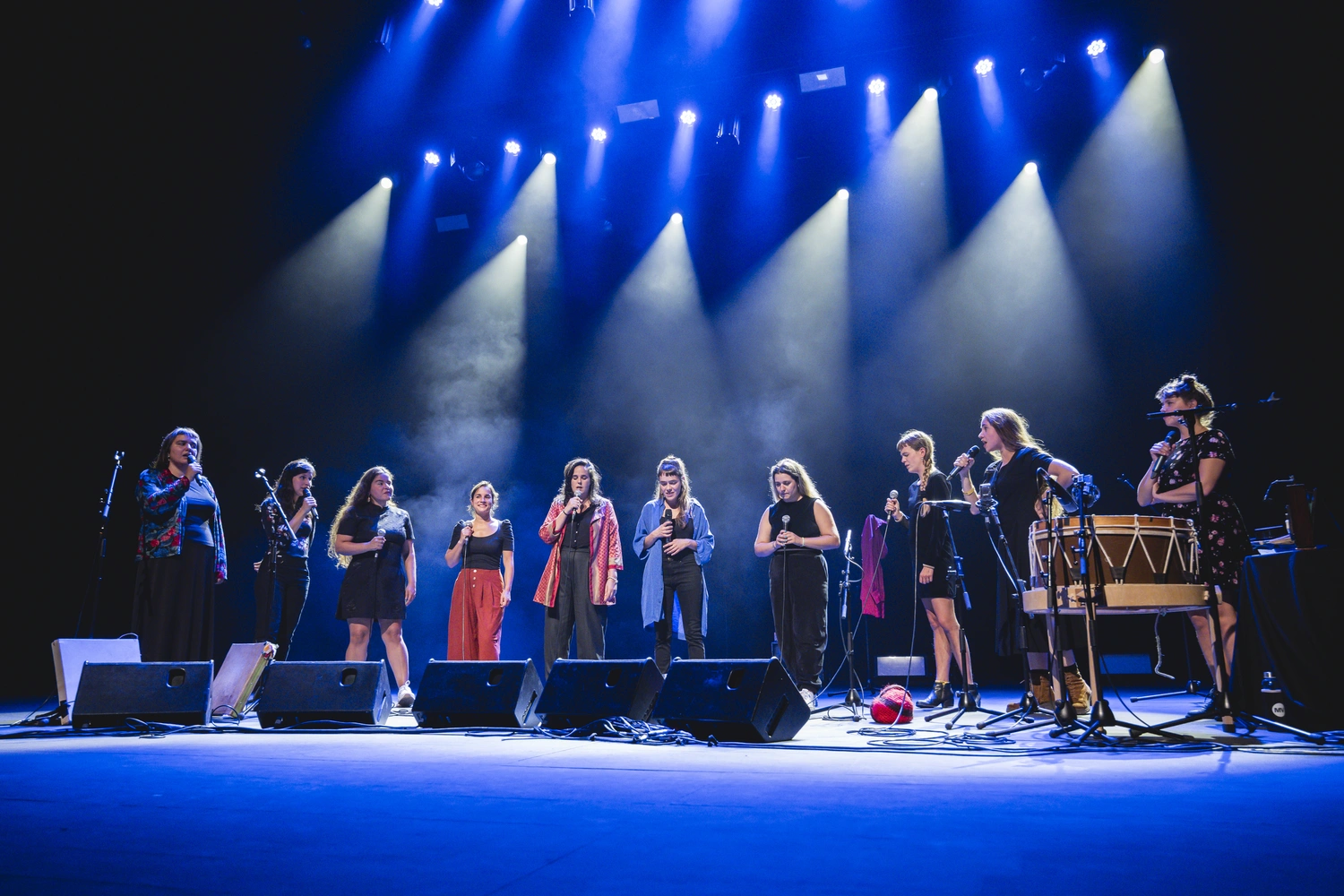
Sopa de Pedra a Portuguese all-female vocal ensemble that explores the country’s oral traditions, passed down for generations by women through work songs, lullabies, ballads, and festive and religious songs. Their music is based on a cappella polyphony, sometimes accompanied by traditional percussion instruments such as the adufe and the pandeiro. Through their polyphonic arrangements, they breathe new life into a heritage long confined to the domestic sphere, bringing it to the forefront of contemporary stages, both in Portugal and abroad. Concert curated by Alain Weber.


Dates and times
Wednesday, June 24, from 7:00 p.m. to 8:00 p.m.

Address
Cascais Marina

Accessibility
Accessible to wheelchair users. Participatory performance involving movement and sound.

Additional Information
Free entry. Booking in advance is recommended; plan to arrive 15 minutes early to secure your place. Walk-ins are welcome subject to availability.
The work of Sopa de Pedra is rooted in the tradition of Portuguese female singing, long present in field work, festivities, evening gatherings and the rituals of daily life. The group explores this oral heritage with great care, focusing on repertoires historically carried by women: work songs, Christmas and Epiphany songs (janeiras and reis), love songs, lullabies, romances and devotional chants.
Their practice is built around a cappella polyphony: voices intertwine, at times supported by traditional percussion (adufe, pandeiro, ferrinhos), giving voice to a powerful, raw and deeply territorial Portugal. Far from a museum-style reproduction, they reinterpret the pieces they collect, allowing themselves personal arrangements, harmonisations and original compositions inspired by the traditional repertoire.
Beyond the music, their approach carries a deeper commitment: to restore audibility to women's voices long confined to the domestic sphere and to the realm of the unofficial, and to bring this heritage into dialogue with contemporary issues. On stage, their understated yet deeply present performance invites the audience into an attentive, almost ritual listening, where the voice becomes a place of shared memory.
Concert curated by Alain Weber.
© Xavi Torrent
Sopa de Pedra
Sopa de Pedra is an all-female Portuguese vocal ensemble formed in Lisbon in the early 2010s. The name literally "stone soup" refers to a well-known Portuguese folk tale, in which a simple stone becomes the starting point for a shared meal: a fitting metaphor for the values of transmission, generosity and collective creation that guide the group's work.
The project grew out of the meeting of several singers united by a passion for Portuguese traditional music and for the oral repertoires long carried by women in the villages of mainland Portugal from the Alentejo to the Minho, including the Beiras, Trás-os-Montes and the Lisbon region. Drawing on field recordings, sound archives and encounters with singers from rural communities, they have built their own repertoire, which they arrange for multiple voices.
For over a decade, Sopa de Pedra have been a familiar presence on the Portuguese scene, performing regularly at world music and vocal tradition festivals both in Portugal and abroad. They have become a key reference in the contemporary revival of Portuguese female traditional singing.
© Xavi Torrent

The artists