
.webp)


Stone Soup
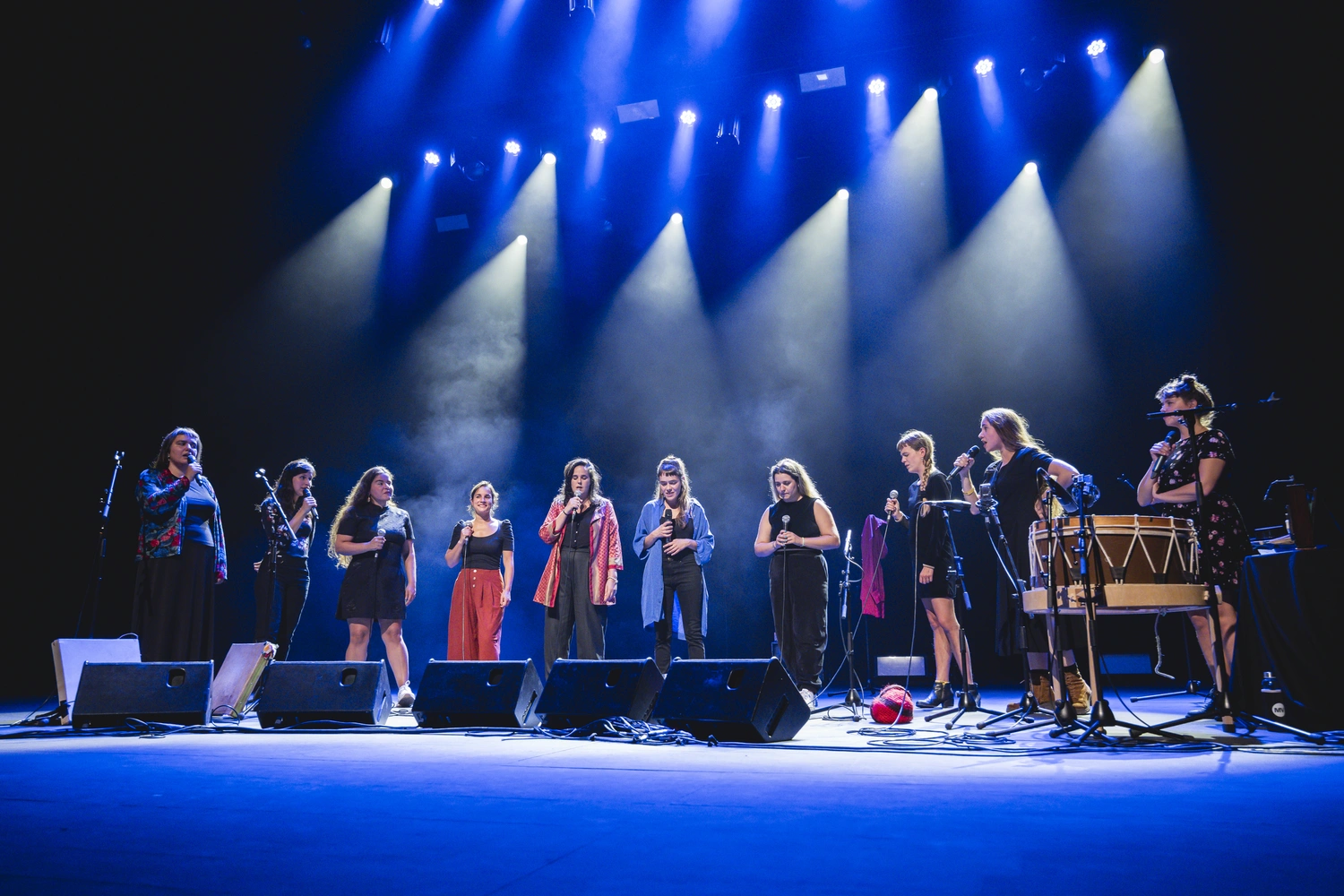
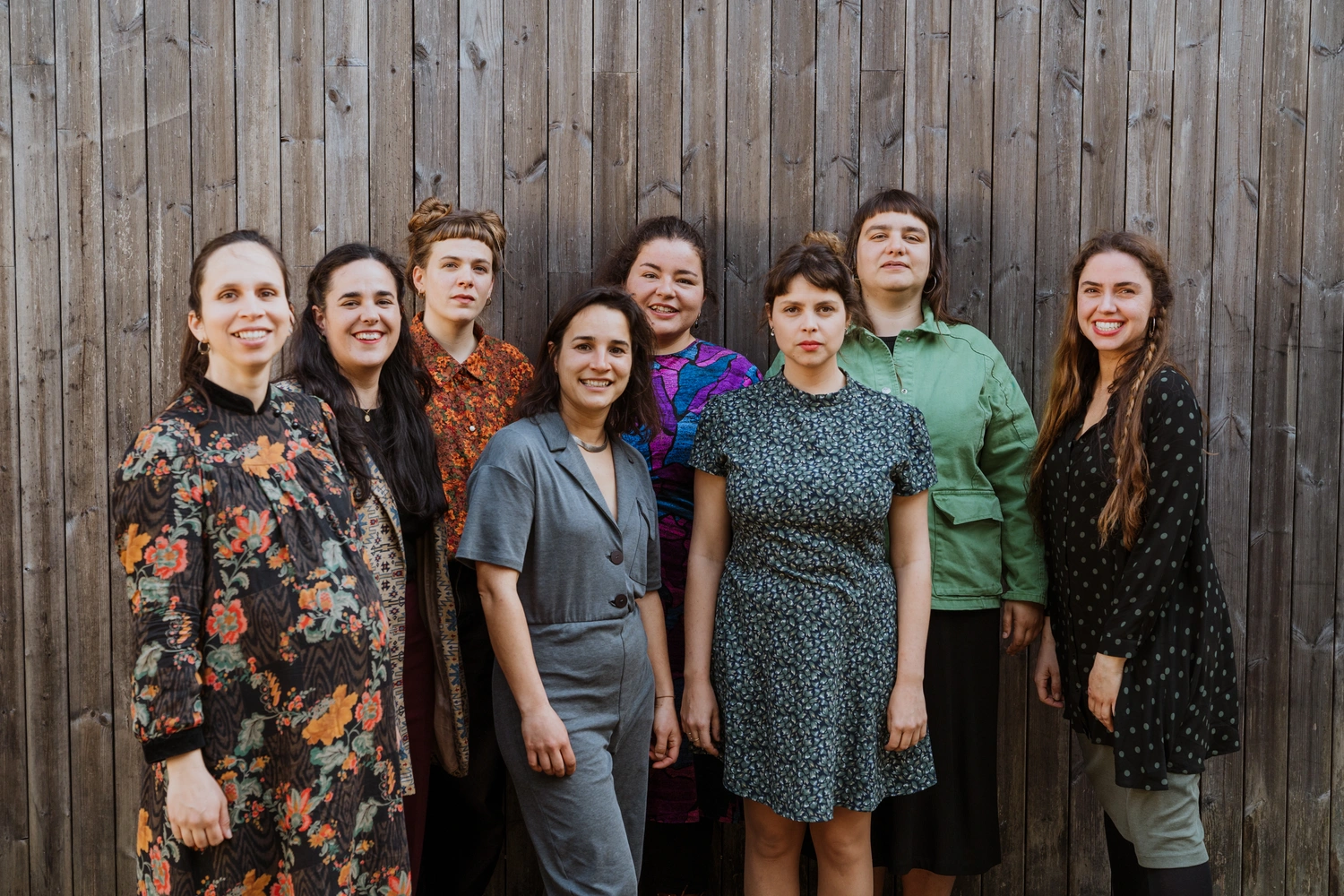
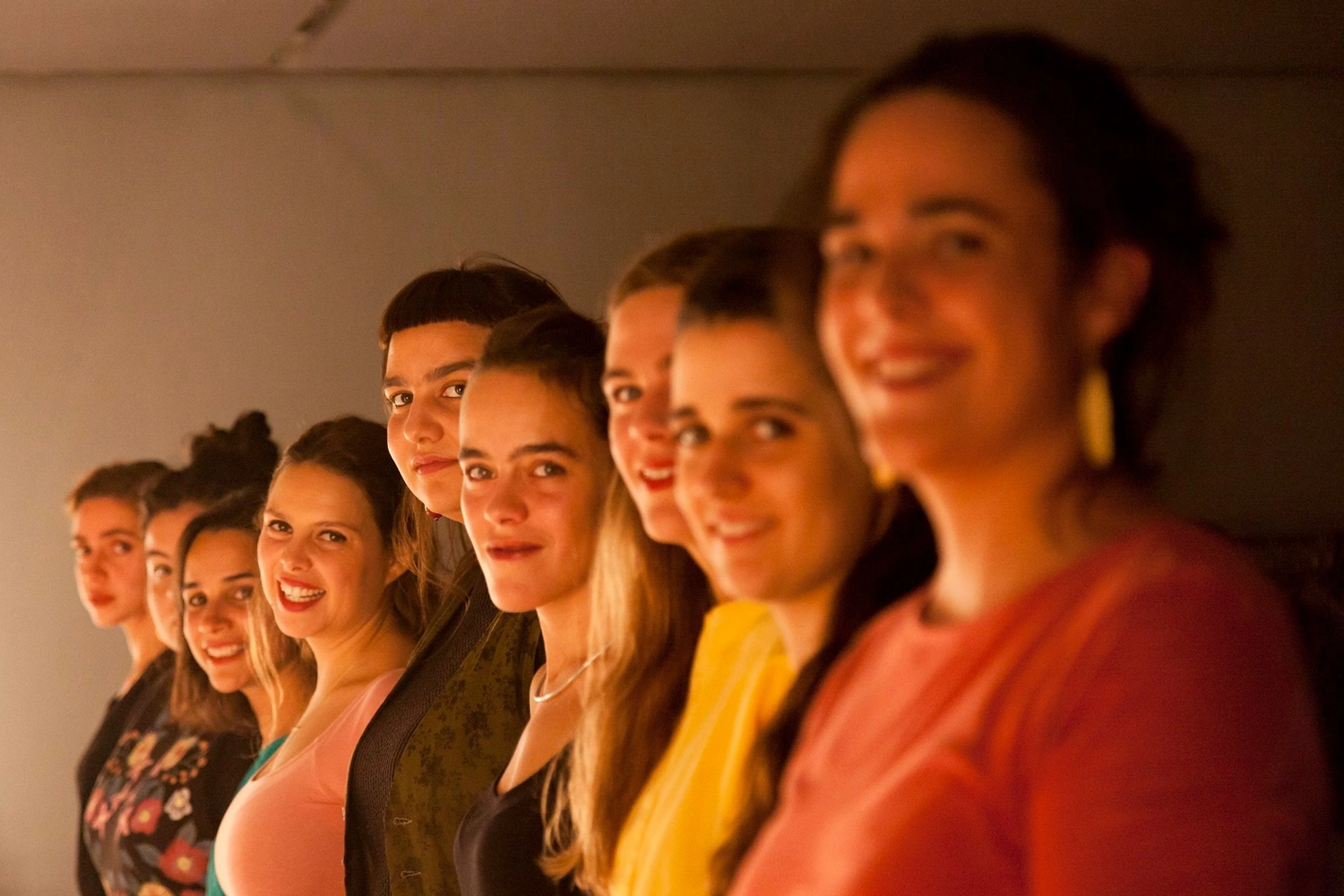
Sopa de Pedra is a Portuguese all-female vocal ensemble that explores the country’s oral traditions, passed down for generations by women through work songs, lullabies, ballads, and festive and religious songs. Their music is centered on a cappella polyphony, sometimes accompanied by traditional percussion instruments such as the adufe and the pandeiro. Through their polyphonic arrangements, they breathe new life into a heritage long confined to the domestic sphere, bringing it to the forefront of contemporary stages, both in Portugal and abroad.

All dates


STONE SOUP


Sopa de Pedra is a Portuguese all-female vocal ensemble that explores the country’s oral traditions, passed down for generations by women through work songs, lullabies, ballads, and festive and religious songs. Their music is centered on a cappella polyphony, sometimes accompanied by traditional percussion instruments such as the adufe and the pandeiro. Through their polyphonic arrangements, they breathe new life into a heritage long confined to the domestic sphere, bringing it to the forefront of contemporary stages, both in Portugal and abroad.
Sopa de Pedra’s work is rooted in the tradition of Portuguese women’s singing, which has long been a part of farm work, festivities, evening gatherings, and everyday rituals. The group explores this oral heritage with great care, focusing on repertoires historically performed by women: work songs, Christmas and Epiphany songs (janeiras and reis), love songs, lullabies, ballads, and devotional songs.
Their music centers on a cappella polyphony: the voices intertwine, sometimes accompanied by traditional percussion instruments (adufe, pandeiro, ferrinhos), giving voice to a Portugal that is powerful, raw, and deeply rooted in its land. Far from a museum-style reproduction, they reinterpret the pieces they collect, allowing themselves personal arrangements, harmonizations, and original compositions inspired by the traditional repertoire.
Beyond the music, their approach reflects a deeper commitment: to give a voice back to women who have long been confined to the domestic sphere and the informal sector, and to create a dialogue between this heritage and contemporary issues. On stage, their understated yet deeply engaging performance invites the audience to listen attentively, in an almost ritualistic manner, where the voice becomes a space for shared memory.
© Xavi Torrent
© Xavi Torrent
Stone Soup
Sopa de Pedra is a Portuguese all-female vocal ensemble formed in Lisbon in the early 2010s. Its name, which literally means “stone soup,” refers to a well-known Portuguese folk tale in which a simple stone becomes the starting point for a shared meal: an eloquent metaphor for the values of transmission, generosity, and collective creation that guide the group’s work.
The project began when several singers came together, united by a passion for traditional Portuguese music and for the oral repertoire passed down from generation to generation by women in the villages of mainland Portugal—from the Alentejo to the Minho, particularly in the regions of Beiras, Trás-os-Montes, and Lisbon. Drawing on field recordings, sound archives, and encounters with singers from rural communities, they have built their own repertoire, which they arrange for multiple voices.
For over a decade, Sopa de Pedra has been a leading figure on the Portuguese music scene, performing regularly at world music and traditional song festivals both in Portugal and abroad. The ensemble has become a major force in the contemporary revival of traditional Portuguese women’s singing.
Practical information

Address
Cascais Marina

Accessibility

Dates and times
Wednesday, June 24, from 7:00 p.m. to 8:00 p.m.

Safety

ADDITIONAL INFORMATION
EXPERIENCES On board


Immersive exhibition Presents
Created with the exceptional collaboration of the Musée du Louvre, this exhibition highlights female figures in Mediterranean civilisation, thanks to the digitisation and modeling of part of the Louvre's collections. A two-stage experience: an introductory film to provide context, followed by an immersive experience in a 16-meter-long tunnel covered by 120 m2 of LED screens.
A sound journey through the Mediterranean
An immersive sound experience designed by Ircam, inviting the public to explore the richness and diversity of the Mediterranean through headphones equipped with spatialized sound.
.webp)
© Elisa Von Brockdorff
The artists

Frequently asked questions
Yes, the boat is freely accessible on site. However, you can pre-book your time online on our website.
For reasons of safety and preservation of the boat, high heels and stilettos may not be worn on the boat.
The museum boat is open to all free of charge. To find out on which quay it will be moored, or to pre-book your slot, consult the page dedicated to your town.
Appropriate facilities have been set up on the Festival site for the reception and access of people with reduced mobility. The boat is equipped with a 1m-wide ramp, accessible to people with reduced mobility, but may require the accompaniment of a third party due to its gradient of over 6%. Access to the aft deck and immersive exhibition is possible. However, the upper deck is not accessible. Please inform us in advance of any special accessibility requirements, so that we can make the necessary arrangements.