.webp)



When I was a child, I used to see my mother's feet bare and cracked…
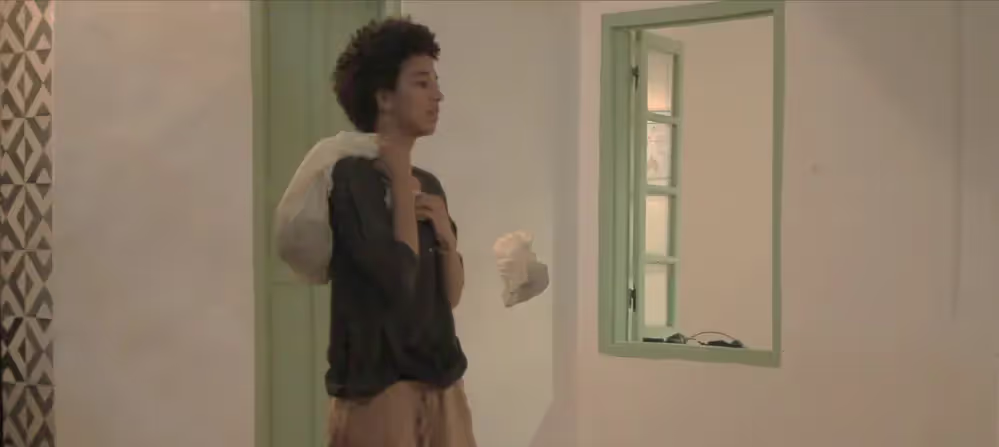
A physical and poetic performance that delves into the body’s memory, maternal legacy, and the silent weight of trauma. Through symbolic gestures, fragmented monologues, and intimate rituals with stone, water, and fabric, exploring themes of pain, resilience, and transformation. Blending personal narrative with collective emotion, the piece becomes a space where memory and the tragic beauty of the body intertwine.

Dates and times
Thursday, October 9, 19:00 - 19:30

Address
Port of Piraeus, Gate E8, Stage
The body’s memory and art come together in a strong and complex relationship. Memory is a source of inspiration for many artists, as it allows them to draw from their own memories, personal experiences, and emotions to create artworks that may stir buried feelings in the viewer, or perhaps stir nothing at all. And that’s where the complexity I mentioned at the beginning comes in! Because the body’s memory is individual and partial, meaning it’s very difficult to translate or transmit it faithfully. It’s just something we feel. They’re moments from our lives that occupy a space within the inner landscape of the body and sometimes form violently and beautifully on the contours of that body.
The more tragic and violent the memories, the clearer and more powerful they are. We can’t erase or purify them. We can’t forget that pain,but we try! And when we can’t, we carry it. Along the way, we grow accustomed to its weight, and it becomes part of us. We become one with it, a single mass,and we learn to walk in a new way.
Sometimes, or often, I feel like it’s the legs that take the biggest hit in all of this. They’re the ones that carry everything. The back and shoulders just assist. Your legs are what hold you up, and you probably never tried to look at them and reflect on the distance between your legs and your eyes, a distance that’s both close and far at the same time.
Now, I’m not trying to defend or prove anything. I’m just trying to share thoughts or things going through my mind, or my heart, if we want to say that.
Courtesy of the artist
I am a tragic body. Every part of me has a story. Now, I’m just a shell, a piece of who I once was, and what remains is just fragments. What matters now is the shell. I realized later that pain is the only thing that justifies my existence and reminds me that I’m alive in this chaotic world.
There’s a strange pull to suffering, when you find yourself standing in darkness, unsure where you are, cold, wanting to scream but unable to, with nothing to hold onto. You cling to that darkness and let it swallow you, even though it feels like trying to catch the wind with bare hands. But what can you do? You enjoy it anyway, in all its forms.
In my case, I found my mother’s legs, the darkness, and Asguin. I already explained the legs. The darkness is self, explanatory. Now you’ll ask me, and Esghin?
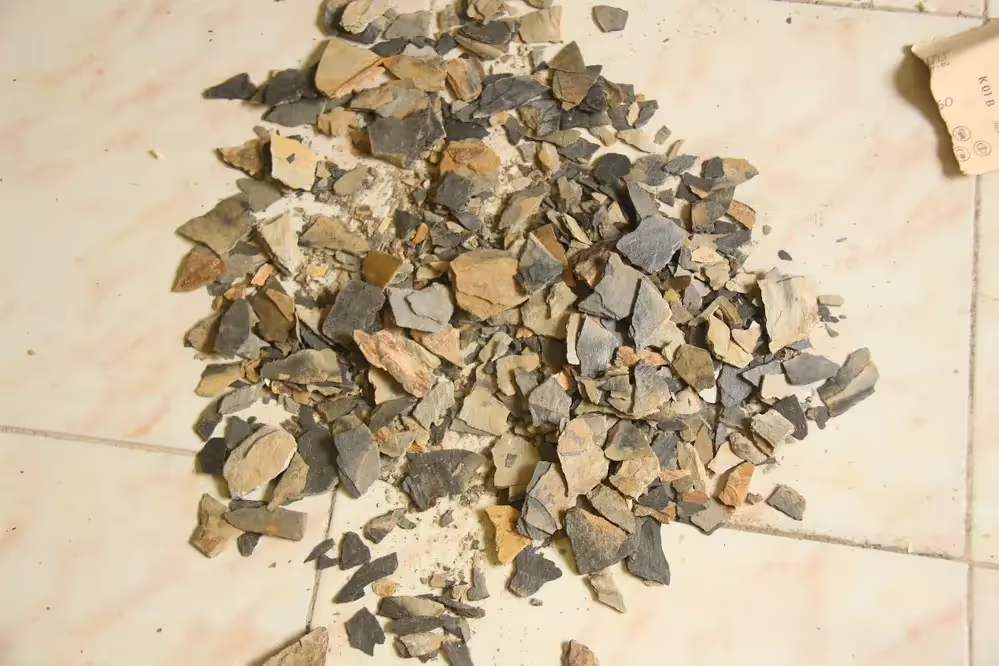
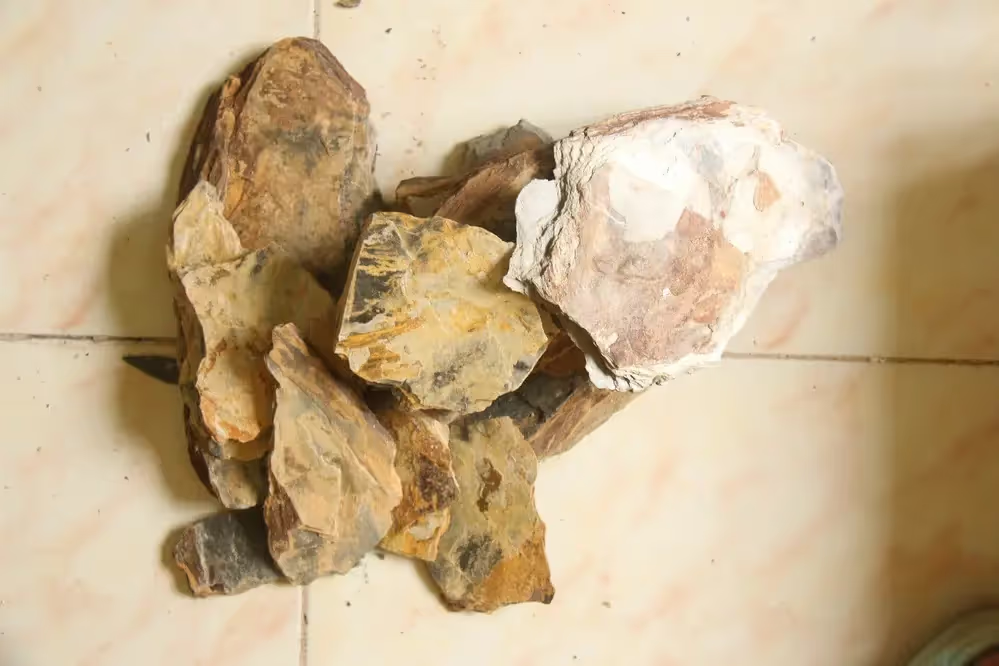
Asguin is like me. Asguina, a clay stone, hard and cracked, but it easily breaks. Contradictory in its details. Sharp, yet fragile. And its color is close to the color of skin,the color of the body and its symbolism…
From all this, I only wanted to express the contradiction within me,and the contradiction we all live in, in this new world. Legs make us think of freedom, the sky, wings,even when bruised or soaked in blood. But the stone is heavy, immobile, and endures. And the legs only live as long as the body does.
Mouna Ahizoune, based in Morocco, participating in the Art Explora Crossed Residency program in the Mediterranean, selected by Laila Hida for a month-long residency at ATOPOS cvc Office of Hydrocommons.
Courtesy of the artist
Mouna Ahizoune
Η Mouna Ahizoune δραστηριοποιείται κυρίως στην περφόρμανς, το κείμενο, τη γλυπτική και στη χρήση πρώτων υλών όπως η πέτρα. Η έρευνά της εξετάζει το σώμα ως φορέα μνήμης και κατώφλι μεταμόρφωσης: ένα σώμα που αντιστέκεται, που επαναλαμβάνεται, που αντέχει και που, μέσα από την περφόρμανς, επιχειρεί να μεταδώσει όσα δεν μπορούν να ειπωθούν με λόγια.
Συχνά αντλεί έμπνευση από αντικείμενα της καθημερινότητας — εργαλεία βάρους, ρυθμού και επανάληψης — τα οποία ενσωματώνουν τόσο τη σωματική προσπάθεια όσο και ένα συμβολικό φορτίο. Μέσα από αυτά τα αντικείμενα και τις χειρονομίες, αναστοχάζεται πάνω στην αντοχή του σώματος, την επιμονή των συνηθειών και τη σιωπηλή μνήμη που είναι χαραγμένη σε απλές αλλά ουσιαστικές πράξεις.
Σήμερα επιδιώκει να διευρύνει την έρευνά της: να τη μετακινήσει, να την ανοίξει σε νέα πλαίσια και να τη φέρει σε διάλογο με διαφορετικούς χώρους, συναντήσεις και προοπτικές.
Courtesy of the artist
